Tag Archives: #save money by cooking from scratch

Save Money, Make Chicken Paprikash For Dinner!

Inflation and the Trump tariff taxes got you down? Cooking your own meals from scratch can help despite rising grocery prices. Homemade food is significantly less expensive than dining out, and in 2025, it is now cheaper than fast food. Additionally, it tastes better.

Paprikash is a simple Hungarian stew that originated hundreds of years ago. Peppers thrived in southern Hungary, and paprika is ground peppers. Sour cream was introduced into this simple dish at the turn of the last century, adding a bit of luxury to this humble stew.

Paprikash is a dish my mom made as part of her dinner rotation. You could call this part of my international dining experience, as we are not Hungarian. In that rotation was Chop Suey, which I thought was real Chinese food growing up, but it’s not. I was so sophisticated! (That is a joke.)

I love dishes that are simple to make, don’t require many ingredients, and are delicious. Chicken Paprikash fits that bill. I’m making it in a pressure cooker, which is what my mom did. However, it could also be made in other ways, for instance, using a heavy pot (Dutch oven) on the stove or in the oven. In that case, you would need to adjust the liquid a bit and stew the meat longer. Just search for a recipe that uses your particular cooking method. For example: “Chicken Paprikash made in the oven.”

You will find that there are no absolutes for this dish. Some recipes use more or less paprika, others use different chicken parts. Personally, I think this dish is best with bone-in chicken thighs, but I had boneless chicken breasts in the freezer, so I used those.

The best recipes are flexible, as they allow you to use up what you have or what is on sale. Most soups and stews fall into that category, and as you gain confidence in your cooking, you will soon be substituting ingredients while still achieving delicious results. Let’s move on to the recipe.

Easy Chicken Paprikash

This recipe is from the website dadcooksdinner.com

Here are the ingredients. They are pretty simple. I’m using cut-up boneless skinless chicken breasts, as that is what I had in the freezer. I’m seasoning the chicken with seasoned salt, which contains salt, pepper, and paprika (among other spices), for ease. I’m using paprika from the Walmart spice brand, as that is what I had, but a quality Hungarian paprika would be better. I’m mentioning substitutions to illustrate that it is OK to substitute. The result will be a bit different, but it will still be delicious. Substitute like with like. By the way, paprika is made from sweet peppers, so this dish is very mild and not hot.

Melt some butter in a pot. In this case, I’m using an electric pressure cooker (AKA Instant Pot) on the “sear” setting.

Brown the chicken in batches to prevent overcrowding; overcrowding steams the chicken rather than browning it. Remove it from the pot.

Sauté the onions for about 5 minutes, then add the garlic and cook for around 1 minute more. Garlic is high in sugar, so if you add it too soon, it will burn.

Add your spices and the tomato paste and cook for around 30 seconds. This “blooms” your spices. However, if you do this for too long, you will burn them, and you don’t want to do that.

Add the cup of chicken broth. I’m using hot water with some “Better Than Bouillon.” You could use real stock, boxed chicken broth, or even bouillon cubes. Use what you have on hand. Remember that bouillon concentrates are salty, so add salt sparingly. You can always add more salt when the dish is completed, but you can’t take it out. My finished dish was salty enough with the small amount of salt that I added along with the salt in “Better Than Bouillon.” Note: I only added around 1/2 teaspoon of salt, plus the seasoned salt that I used to season the raw chicken. This, with the “Better Than Bouillon,” was more than enough salt.

Return the browned chicken to the pot.

Pressure cook for 15 minutes on high. Let the pressure come down on its own. Alternatively, you can release the pressure 10-15 minutes after the cooking cycle has completed. That is what I did. If you release the pressure as soon as the cycle has finished, your chicken will be drier, as the sudden pressure change will force some of the juice out of the meat.

While the chicken was cooking, I boiled up some noodles on the stove. Noodles are traditional, but you could use any starch you have on hand: mashed or boiled potatoes, rice, or even toast as the base of the dish.

I mixed the sour cream with around a cup of the hot broth from the stew until smooth, then returned it to the pot. I tasted for a seasoning adjustment, but it wasn’t needed. I tend to like thicker stews and soups, so I thickened the stew by mixing a heaping tablespoon of cornstarch in around 1/3 of a cup of cold water and then poured (while mixing) that into the bubbling stew. This is an optional step.

Here it is, served with some of my homemade bread maker bran and flaxseed bread. My wife and daughter both said, “This is really rich and delicious,” without solicitation.

Cooking from scratch will become easier the more you do it. I hardly think about it. When you become confident in making one type of dish, making the next similar one is a snap. If you can make soup, you now have the skills to make stews. And so it goes.

Ease money stress by doing things that put you in charge. Cooking from scratch is one of those things.

Bon appetite!

Mike

Save Money, Make Chicken Paprikash For Dinner Tonight!

Food prices have been rising significantly and are expected to continue increasing with the new tariff taxes that we are all now paying.  Since everything, from the aluminum in a soda can to the tomatoes on our salads, is imported, it is expected that the prices of most foods will increase further over time. Even US-sourced foods are skyrocketing in price.  I was recently at the grocery store and spotted a beef brisket being sold for an astounding $75!  I always thought of brisket as a tough, cheap cut of meat, but along with ribs and chicken wings, what was once cheap is now expensive.

Seventy-five dollars for a beef brisket!

I was on a road trip with my wife.  We stopped for breakfast at McDonald’s.  I got a breakfast meal, she got an Egg McMuffin, coffee, and a soda, and our bill was almost $20. Eating at McDonald’s was always a cheap way to feed my family when we didn’t want to cook. My kids eat less conservatively than Julie or me.  If we were traveling as a family, a breakfast at McDonald’s could now cost us $60 to $70. I’m starting to think of Fast Food as a luxury option!

Groceries have become expensive, but it is still more cost-effective to cook at home. Chicken thighs are relatively inexpensive, especially when you buy them in bulk.  I’ll often purchase them at Costco, as they are already portioned into smaller packs that are suitable for freezing.  If I find a reasonable price elsewhere, I separate the chicken into meal-sized portions and freeze them using my vacuum sealer. 

A vacuum sealer is the unsung hero of food preservation.  Vacuum sealers can be a relatively inexpensive purchase and can dramatically reduce your food waste.  I’ll separate meats into meal-sized portions, label the vacuum bags with the type of meat and the date, and then freeze them. This prevents waste from freezer burn.  

If we only use part of a package of bacon, I’ll vacuum-seal the rest and store it in the refrigerator.  Vacuum-sealed bacon will stay fresh much longer.  I’ll do the same with a cut avocado to prevent it from turning brown.  

Individual portions of a casserole or soup can be vacuum sealed and frozen.  Need a quick lunch?  You can reheat the food by the “boil in bag” method, or by venting and microwaving. 

Being creative, you can extend the lives of many foods by vacuum sealing.  A vacuum-sealed chunk of cheese won’t dry out and will stay mold-free.  Strawberries (using a vacuum jar or a Mason Jar sealed with a vacuum-seal jar attachment) will stay fuzz-free much longer in the fridge.  Fresh meats will also remain good longer in the refrigerator if vacuum sealed first.  Sometimes, I’ll find meat on sale and I’ll keep it in the fridge to cook the next day.  Life happens, and plans change.  If I have to delay cooking, I’ll vacuum-seal the refrigerated meat to extend its shelf life longer.

The most significant expense associated with using a vacuum sealer is the cost of the bags. Brand-name bags are great, but they are expensive.  However, you can find acceptable and much cheaper off-brand alternatives when buying in bulk on Amazon and other sites.  

I typically use a different type of vacuum sealer, known as a chamber vacuum sealer.  This type creates a stronger vacuum and easily handles liquid contents.  Traditional external vacuum sealers require special techniques when sealing liquids. Another significant advantage of using a chamber vacuum sealer is the lower cost of the bags, which is comparable to that of a Ziploc bag.  Again, buying them in bulk is the key. 

You can get a decent traditional external vacuum sealer for under $100, with many costing under $60.  Chamber sealers used to cost well over $1,000, but Chinese-made versions hit the market a few years ago, and I have seen chamber sealers in the sub-$300 range.  The brand-named $1,000 sealers were designed for semi-professional use and were intended to last a consumer a lifetime.  I can’t verify the longevity of the no-brand units, but they would likely last well enough for a homeowner if properly maintained. I have tried a few of them, and they seal just as well as the brand-named products.

I made this little video for a friend who was beginning to use a vacuum sealer. However, you might find it helpful as well.

Baked chicken is delicious, but can be boring if served too often.  There are thousands of recipes that use chicken as an ingredient, stretching this meat while creating a delightful end result.  Today’s recipe is for Chicken Paprikash, featuring chicken thighs in a creamy paprika sauce.  Due to the richness of the dish, one decent-sized chicken thigh served over noodles is usually enough for most of my family members, with my son occasionally opting for two.  You can substitute other chicken parts if you wish.  Chicken legs are even less expensive than chicken thighs.  I’m guessing that two good-sized legs would constitute a portion for a typical eater. 

I use an electric pressure cooker (similar to an Instant Pot) to speed up my cooking process.  However, you can also prepare the same recipe in a heavy pot/Dutch oven or even a heavy, high-sided frying pan with a lid. This dish can be prepared on the stovetop or by starting on the stovetop and then finishing it in the oven.  There are also recipes for paprikash that can be made in a slow cooker.  If you choose a different method, just Google for recipe times.  For instance, “recipe for Chicken Paprikash in a Dutch oven.”  Many of the recipes will be similar, but the times and possible amounts of liquids may vary.  If you are using a manual stove-top pressure cooker (which operates at a higher pressure), you can reduce the pressure cooking time slightly (13 minutes instead of 15 minutes under pressure).

Chicken Paprikash Made In An Instant Pot- Electric Pressure Cooker.

Ingredients

-Oil

-3-4 pounds chicken thighs

-salt and pepper

-1 large onion chopped

-heaping teaspoon jar garlic

-ÂĽ cup paprika

-1 heaping tablespoon tomato paste

-12 oz chicken broth, or water with a broth substitute like “Better Than Bullion.”

-1 cup sour cream

-½ cup half-and-half or heavy cream (optional)

  1. Season the chicken with salt and pepper.  Set the pressure cooker to “sear” and add a small amount of oil.  Lightly brown the chicken in batches, avoiding overcrowding, as this will cause the chicken to steam instead of brown.
  2. Remove the chicken and add new chicken pieces to brown until the job is completed. Set aside the browned chicken for now.
  3. Add the chopped onion and let it soften in the pressure cooker (the cooker is still on sear/sautĂ©).  When soft, add the garlic and stir for around 30 seconds.  Then add the paprika and lightly cook it to bring out its flavor.  Avoid burning the paprika.  Add the tomato paste. After around 20 seconds, add the broth to the mix and stir everything together.
  4. Return the chicken to the pot and pressure cook on high for 15 minutes.  Let the chicken “rest” for 10 minutes after cooking is done before releasing the pressure.  This will keep the chicken juicy.
  5. Remove the chicken to a serving platter.  Put the sour cream in a bowl and add around  ½ cup of the broth from the pressure cooker, stirring until everything is incorporated.  Then mix this into the broth in the pot.  
  6. Optional:  I sometimes add ½ cup of half-and-half or heavy cream if I have it on hand.
  7. If you prefer a thicker sauce, mix a heaping tablespoon or two of cornstarch with around two tablespoons of cold water, then stream/mix this mixture into your boiling broth.
  8. Adjust the salt and pepper to your taste in the sauce and pour it over the chicken.
  9. Serve on a starch of your choice.  Noodles work well.  I had some dried spätzle that I cooked up.  
  10. A biscuit, bread, or muffin can complement the meal, making your dinner hearty and satisfying.

My measurements are approximate as I cook by feel.  With many recipes, a slight variance doesn’t make much of a difference in the end product.  For instance, using Âľ cup or 1 1/4 cups of sour cream will both yield a delicious paprikash.  When you are starting your cooking journey, the most essential ingredients to measure are the spices (including salt), as too much can ruin a dish.  Baking tends to require more exact measurements, but even with baking, some variance is allowed. 

Chicken Paprikash utilizes many common food staples and doesn’t require exotic ingredients.
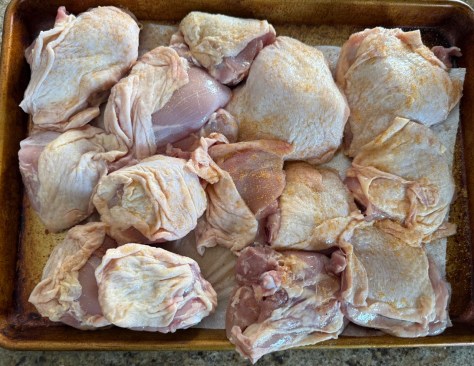
Pat the chicken dry to reduce spattering when browning. I used some seasoned salt, but salt and pepper work too.
Brown the chicken in batches, avoiding overcrowding.
Sauté the onions in the electric pressure cooker until they soften, then add the garlic. Adding the garlic too early will cause it to burn.
Add the paprika and cook it gently, avoiding burning. Add the tomato paste.
Add the broth and mix until everything is combined.
Return the chicken to the pot, secure the lid, and pressure cook for 15 minutes.
After the cooking time is done, allow the chicken to rest in the cooker for 10 minutes before releasing the steam. In a pinch, you can release the steam immediately, but that may result in slightly drier chicken.
Mix some of the hot liquid from the pressure cooker into the sour cream until smooth. Then pour this mixture back into the pressure cooker, which is once again set to “sear/brown.”
With the pressure cooker still set to “sear/brown,” adjust the salt/pepper levels to your liking. Add salt only a little at a time (around 1/2 teaspoon), tasting in between each addition. You can always add salt, but you can’t remove it. If you want to add a thickener, such as cornstarch, the liquid must be boiling. 1-2 heaping tablespoons of cornstarch dissolved in approximately two tablespoons of cold water should suffice. Add this in a stream while stirring, and your sauce should thicken in a minute or two.
Pour the sauce over the chicken to complete the dish. Reserve additional sauce to be added over the noodles.
Served over some noodles, accompanied by a biscuit to complete the meal. Very filling and delicious!