A Shaving Story

In February 2024 this website crashed for no apparent reason. Despite using professionals at GoDaddy.com it was impossible to restore anything after October 2021 (over 100 posts). I do have many of those post in draft form (no final edit or photos) and I have decided to repost them in that manner. I apologize for typos and other errors. How do I feel about losing all of my original work? Life goes on.

Your video got me thinking about my own shaving journey.  I’m almost 70 and when I started shaving (in the 1970s)  I went with a “modern” choice, a Shick injectable.  At some point, I switched to the disposable Gillette “Good News” razors, and then a series of cartridge razors.  I was constantly buying new systems because I could never remember what version I had when I had to buy refills. It was at that point, over 15 years ago, that I made the switch to traditional DE razors, and I haven’t looked back.  I have gone from the hobby to the task, to the hobby, and back again.  However, no matter how I approached shaving I knew that the DE option was the better option.  I’m now back into the hobby and I’m enjoying the fun of trying out new soaps and razor blades.  But, that is not why I’m writing this comment.

Growing up in the 1960s, we lived in a pretty run-down house that was built in the 1920s. I don’t think the bathroom was ever updated.  The sink hung on the wall and was made of heavy cast iron.  The porcelain finish had long ago lost its glaze and cleaning it involved polishing it with powdered cleanser to a dull soap-scum-free finish.  The tap wasn’t mixing, there was a hot faucet and a cold faucet.  If you wanted to wash your hands you ran both taps and quickly moved them from scalding hot to freezing cold water and back again.  A bar of soap sat in a plastic soap dish.  the dish had two pieces to allow the soap to drain, but with 7 people using one bathroom, the soap always seemed soggy on the bottom. If you wanted to do any serious type of wash-up you put a white rubber stopper in the sink and filled the bowl.  Our tub was equally worn, and there was no shower or fancy tiles on the wall.  Let’s not even talk about the spitting toilet. Somehow, we survived.

I don’t have a lot of great memories of my dad, but for whatever reason watching him shave was one of them.  I don’t think he shaved every day, probably a few times a week, and certainly for church on Sunday.  He would usually shave in his boxers and an old-style tank top undershirt. He would fill the sink with mostly hot water and add just enough cold to make it tolerable to wash his face.  I can’t say for sure what razor he used, but I do remember that it was a butterfly type, so it was likely a Gillette Super Speed.  I’m certain that it was the most basic, nothing fancy.  I think he used Wilkinson blades, but I also remember him using off-brands like Walgreens (a pharmacy/chemist brand). Foam came out of a can and the brand would vary based on sales.  I remember Barbasol and Walgreens shaving foam, but I’m sure he used others.  I absolutely loved the smell of the shaving foam.  It smelled so clean and masculine to me.  I was very young when I watched my dad shave and in those days he was an imposing figure who I thought could do anything.  I worried that I could never be as strong or successful as he was.

Shaving for him was a chore and strictly business.  I would be amazed to watch him quickly move the Super Speed around his face.  I don’t remember a “second pass,” but I do seem to recall him squirting an extra dollop of foam and rubbing it in areas that needed a little extra work.  After a rinse, he would always rub his face for a final check.  On special days (like when he was going to the union hall) he would splash on some Mennen aftershave, which I thought was the finest cologne on the planet.  I’m a daily cologne wearer and I honestly think I would wear that scent if it lasted more than 10 minutes on me. 

On occasion, he would change out the blade and toss the old one in a “secret slot” built into the medicine cabinet.  I think the old blades just fell between the joists in the wall   I would imagine all of the blades there and even fantasized that I could somehow retrieve and resell them (you have to remember I was a small child).  I don’t think that he talked to me, but he did allow me to sit on the toilet seat and watch him. The smell of commercial shaving foams and Mennen aftershave flood me with pleasant memories to this very day.

Now, I have a family of my own and I live in a house that is about three times the size of the one I grew up in.  My bathrooms are fancy.  My toilets don’t spit.  I wonder what memories my kids will have of me, but I can assure you that I have made many efforts to be there for them. I can buy whatever soap or razor blades that I want.  I don’t have to think about the cost. Life is good and I am happy. My dad is long gone, but I wonder what would think of his son.  The one who worked hard, went to med school, tried to make the lives of others better… and is now retired and reflecting on his own life.  Somehow, that thought puts a smile on my face.

It is easy for me to remember some less-than-joyful memories of my dad, but your video reminded me of some happy ones.  Thanks so much.

————————-

Modified for Facebook

Growing up in the 1960s, we lived in a house that was built in the 1920s. I don’t think the bathroom was ever updated.  The sink hung on the wall and was made of heavy cast iron.  The porcelain finish had long ago lost its glaze and cleaning it involved polishing it with powdered cleanser to a dull soap-scum-free finish.  The tap wasn’t mixing, there was a hot faucet and a cold faucet.  If you wanted to wash your hands you ran both taps and quickly moved them from scalding hot to freezing cold water and back again.  A bar of soap sat in a plastic soap dish.  the dish had two pieces to allow the soap to drain, but with 7 people using one bathroom, the soap always seemed soggy on the bottom. If you wanted to do any serious type of wash-up you put a white rubber stopper in the sink and filled the bowl.  Our tub was equally worn, and there was no shower or fancy tiles on the wall.  Let’s not even talk about the spitting toilet. Somehow, we survived.

Watching my dad shave is one of my pleasant memories.  I don’t think he shaved every day, probably a few times a week, and certainly for church on Sunday.  He would usually shave in his boxers and an old-style tank top undershirt. He would fill the sink with mostly hot water and add just enough cold to make it tolerable to wash his face.  I can’t say for sure what razor he used, but I do remember that it was a butterfly type, so it was likely a Gillette Super Speed.  I’m certain that it was the most basic, nothing fancy.  I think he used Wilkinson blades, but I also remember him using off-brands like Walgreens. Foam came out of a can and the brand would vary based on sales.  I remember Barbasol and Walgreens shaving foam, but I’m sure he used others.  I absolutely loved the smell of the shaving foam.  It smelled so clean and masculine to me.  I was very young when I watched my dad shave and in those days he was an imposing figure who I thought could do anything.  I worried that I could never be as strong or successful as he was.

Shaving for him was a chore and strictly business.  I would be amazed to watch him quickly move the Super Speed around his face.  I don’t remember a “second pass,” but I do seem to recall him squirting an extra dollop of foam and rubbing it in areas that needed a little extra work.  After a rinse, he would always rub his face for a final check.  On special days (like when he was going to the union hall) he would splash on some Mennen aftershave, which I thought was the finest cologne on the planet.  I’m a daily cologne wearer and I honestly think I would wear that scent if it lasted more than 10 minutes on me. 

On occasion, he would change out the blade and toss the old one in a “secret slot” built into the medicine cabinet.  I think the old blades just fell between the joists in the wall   I would imagine all of the blades there and even fantasized that I could somehow retrieve and resell them (you have to remember I was a small child).  I don’t think that he talked to me, but he did allow me to sit on the toilet seat and watch him. The smell of commercial shaving foams and Mennen aftershave flood me with pleasant memories to this very day.

Now, I have a family of my own and I live in a house that is about three times the size of the one I grew up in.  My bathrooms are fancy.  My toilets don’t spit.  I wonder what memories my kids will have of me, but I can assure you that I have made many efforts to be there for them. I can buy whatever soap or razor blades that I want.  I don’t have to think about the cost. Life is good and I am happy. My dad is long gone, but I wonder what would think of his son.  The one who worked hard, went to med school, tried to make the lives of others better… and is now retired and reflecting on his own life.  Somehow, that thought puts a smile on my face.

A Different Way

In February 2024 this website crashed for no apparent reason. Despite using professionals at GoDaddy.com it was impossible to restore anything after October 2021 (over 100 posts). I do have many of those post in draft form (no final edit or photos) and I have decided to repost them in that manner. I apologize for typos and other errors. How do I feel about losing all of my original work? Life goes on.

Last Thursday was a long day. I was helping my sister with a project that I foolishly thought would end by 2 PM. However, I arrived home after 5:30 PM, and the day’s main event was yet to come.

Grace graduated from university in May, and she is taking a gap year to build clinical hours and apply to graduate school. The application process for her degree is rigorous and involves many hoops that she has had to jump through, including admission interviews. Many schools have virtual interviews, but some require in-person attendance, including one school located in Cincinnati.  

My goal in raising my children is to support healthy growth and independence. I want to give them every chance to be successful in life. I define success as having a meaningful job while incorporating balance. I understand that fulfillment involves more than money or a particular career. However, having enough cash and a satisfying career goes a long way. Of course, other happiness factors include healthy relationships, a spiritual life, self-growth, and the incorporation of life experiences. 

When it comes to their happiness, I can only point them in a direction. Each of my kids is unique and what they value varies. Importantly, I understand that my goals and dreams for them may not be theirs. My challenge has always been understanding what I want for them vs. what they want. My age, maturity, and life experience give me an advantage over their youth and inexperience, which I want to share with them. However, it doesn’t give me a right to control their futures; that destiny is up to them.

It was 6 PM on Thursday, and Grace and I were about to start our drive to her Friday interview. We would be staying across the Ohio River in Kentucky as a two-night stay at a Cincinnati Holiday Inn Express was clocking in at $550 before taxes, which included the school’s discount. 

My initial feeling about the trip was negative, but that emotion was based on my driving for over 5 hours in the middle of the night. We would arrive at 12:30 AM Central Time or 1:30 AM Eastern Time. I fortified myself with a McDonald’s coffee and faced the challenge. I also consciously and deliberately started to reframe the experience.

Yes, driving a long distance in the middle of the night would be a drag, but there were many positives. I could choose to focus on the negative or redirect myself. Grace is an excellent traveling companion. She is intelligent, thoughtful, and informed. She is an independent kid who has some of my obsessive responsible characteristics; I don’t have to worry about her or her actions.  

The long drive gave us the chance to catch up and allowed me to learn just a little more about her. We filled out time talking and listening to podcasts. The long drive also allowed me to call my sisters and check in with them. In addition, it gave me a chance to test a new cell phone carrier called Visible. Visible resides on the Verizon network yet it is very cost-effective, but it has a few restrictions. My family currently uses T-Mobile, but its rural coverage is poor. I do a lot of boondocking, and Visible could be a viable secondary option to maintain communication with the outside world. I’m currently on a two-week free trial and have already tested the plan in rural Wisconsin with success. The trip to Cincinnati would allow me to check coverage in Indiana, Ohio, and Kentucky.   

I hope you see the active path that I’m taking. I’m reframing a negative feeling and pushing it into the positive zone.  

What about other aspects of this adventure? Grace’s interview started at noon and was scheduled until 5 PM; what was I supposed to do during that time? Our hotel was too far from campus for me to return, and I was uncertain about the neighborhood where the school was located. I assessed some possibilities. I could explore Cincinnati, but I had already done this on several other trips. Anyway, it is more enjoyable for me to do those types of activities when accompanied by others. I could tackle some hiking trails, and I have done that in the past, but I didn’t want to leave Grace hanging if her interviews ended early. I wanted to be there to support her and help her process her feelings about the school.  

As a physician, I have to complete many hours of CME (Continuing Medical Education) credits every licensing period. In the past it was necessary to travel to conferences and meetings, but with the advent of the World Wide Web, CMEs are as close as my laptop. I would go to the school’s library and work on some CMEs when Grace was in her interviews. I would choose to be productive rather than bored. 

The university’s campus was small but charming. Founded by the Sisters of Charity in the 1920s, most of the campus now had a decidedly 1970s look with light brick architecture and a mid-century post-modern style that combined function with just a bit of style. There was a Catholic feel that I found comforting. I have attended secular schools for most of my education, and the sight of some religious imagery gave me a sense of peace. It appeared to be a  school that taught values in addition to facts. 

A helpful groundskeeper directed me to the library, and with my messenger bag in hand, I entered. The room was expansive, with large tables and enormous windows that streamed in soft diffused light. I found a study carrel in a hidden corner, connected to wifi, and went to work. After about 4 hours of intense learning, my old brain had had it. I was ready for a break, and luckily Violet, the campervan, was prepared to accommodate me. I strolled to her, grabbed a cold Diet Coke from her fridge, and lounged on her bed. Soon, I received a text message from Grace that her long interview was over. It was time to pick her up.

That evening we dined at an iconic Cincinnati classic, Skyline Chili. Then off to our room to talk, watch TV, and rest for our morning drive back to Chicago. Our return trip was a repeat of our earlier drive and just as delightful. We were back in Naperville by mid-afternoon Saturday, exhausted but happy.

I write this to remind myself and to encourage you. Just about everything has both a positive and negative side. Some people are proficient at focusing on the negative, no matter the event. These folks can turn anything into a burden by finding potential disasters or inconveniences at every turn. I choose to be different and consciously work on seeing the positives in life. Driving to Cincinnati in the middle of the night was a drag, but the benefits far outweighed the negatives. Grace has received positive responses to her graduate school applications, and she is confident that she will be going to grad school after her gap year. That is a wonderful. Spending time with her is always positive, and it feels terrific to be supportive of her. In addition, I personally benefited by knocking out hours of CMEs when I was captive on campus.   Lastly, I got to test out some technology and travel in Violet. I love the idea of taking my little house on wheels with me wherever I go.

I would encourage you to focus on the positives of your life and situation. You have control over how you feel and how you react to situations. You can choose to live a life filled with negativity and trauma or one of productive expectation. At the end of the day, I always try to take that fork in the road.

Poverty Is Different

In February 2024 this website crashed for no apparent reason. Despite using professionals at GoDaddy.com it was impossible to restore anything after October 2021 (over 100 posts). I do have many of those post in draft form (no final edit or photos) and I have decided to repost them in that manner. I apologize for typos and other errors. How do I feel about losing all of my original work? Life goes on.

My friend, Tom, wanted to do something nice for me while Julie was hospitalized. He surprised me by taking me to breakfast at our favorite spot in the West Loop. There was a problem on I-290, so we exited the expressway in Oak Park and treaded down Madison Avenue.

As we crossed Austin Avenue into Chicago, I was immediately struck by a drastic change. The streets were dirtier; the buildings were in poorer repair. More shocking were the types of businesses, both present and absent. Many fast food restaurants, pre-paid cell phone stores, haircare stores, and storefront churches existed. Although we were driving on a major thoroughfare, I saw no real grocery stores, hardware stores, or other typical shops that were present just west of Austin in Oak Park. The difference was very pronounced. Eventually, we arrived in the toney West Loop—a place of trendy apartments, fabulous restaurants, and well-manicured streets. I have to admit that I felt a sense of relief as I entered familiar territory. However, I also felt a sense of shame. 

I write this post from my study, a room in my house dedicated to me. Next to me is a mullioned window that overlooks a beautiful suburban street. Within a 10-minute drive from my house are at least ten different grocery stores and five gigantic hardware stores. I can access every restaurant imaginable at that same distance, from ethnic to upscale. I drive a nice car and moan that I just spent almost $2000.00 to repair it, but I could afford it. My kids got to go to some of the best schools in the country, and our town’s library is considered the best of any community of its size. Our city parks are safe and well-equipped. The sports teams have the latest gear. The schools have the best lab equipment, computers, smart boards, and teachers.  

Not bad for a once blue-collar kid who worked hard and had a dream, but hold on, that is not where I’m going.

Yes, I worked hard to get to where I am. Yes, I sacrificed a lot to get there. Yes, my current life is better than my childhood life. So that’s the answer. Poor people are poor because they are lazy, stupid, and immoral. Oh, and of course, they are all dangerous criminals. Just watch YouTube to see those scoundrels shoplifting. Stores are closing because everyone who goes into them steals something. Why don’t they work hard like I did? It is not my responsibility to help them out. I advanced my life; they should do the same. Haven’t they heard about pulling themselves up by their bootstraps? Geez!

Of course, I’m being sarcastic. Each barrier that we place takes energy and effort to overcome. Place enough obstacles, and escape is almost impossible. My blue-collar childhood was nothing like I saw in Chicago’s South Austin neighborhood. I lived in a house we owned; there was a branch library, grocery store, drugstore, and hardware store around the corner. We always had food on the table. My parents were invested in my education. I had older siblings who I would emulate. My growing up was not deluxe, but compared to someone growing up in poverty, I was living the life of a millionaire. 

What would it be like to take several buses to just buy a gallon of milk? What would it be like to live in a neighborhood ruled by gangs, where police are viewed with fear instead of welcomed as peacekeepers? What would it be like to grow up in an unstable family or with a parent working multiple jobs just to put food on the table? What would it be like to live in a neighborhood where dropping out of school was the norm? What would it be like not to know how to appropriately fill out a college application and be unaware of whom to ask for help?  

These are just a few things people in poverty must deal with. My kids grew up with a highly educated stay-at-home mom. Their lives were enriched in every way possible. They were provided with experiences at every turn. Yes, they are bright and work hard. However, their energy could be devoted to academic pursuits rather than figuring out how to get food for supper. I give them total credit for their successes. However, their paths were greased by privilege.

It is easy to blame people experiencing poverty for being poor. It is easy to look at a small minority of criminals and vilify an entire group. It is easy to look the other way. But at what cost? I don’t know how to fix this problem, but I know it is a problem.  

My good friend Ralph just sent me a link to a podcast that explores some barriers to people who strive to extricate themselves from poverty. It approaches the topic in a way I had not thought of before. It is an excellent podcast and a good listen, so I am sharing the link with you. 

Peace

Mike

Is Aldi Really Cheaper?

In February 2024 this website crashed for no apparent reason. Despite using professionals at GoDaddy.com it was impossible to restore anything after October 2021 (over 100 posts). I do have many of those post in draft form (no final edit or photos) and I have decided to repost them in that manner. I apologize for typos and other errors. How do I feel about losing all of my original work? Life goes on.

I have been retired for over five years, and because of this, my income is fixed. Despite my retired status, I still have four adults living at home.  How will that change?  Soon I’ll have five adults living at home.  My wife continues to work, so I have taken on many domestic tasks, including grocery shopping and some meal prep.  When I was working, I never thought about the cost of groceries, but that is different now.  In addition, the world has been dealing with inflation, and stores have been practicing shrinkflation.  Buying groceries has become expensive. 

It isn’t unusual to spend $80-90 at a regular grocery store and leave with only two bags.  Years ago, I started to shop at Walmart, which was less expensive and offered a full range of groceries.  However, our Walmart has fallen on hard times via short staffing, poor stock, increased pricing, and foolish attempts at automation.  

Shopping there became a dreaded activity as large areas would be out-of-stock, the produce started to look like the stuff I was throwing out at home, and the prices kept increasing. However, the worst blow was the removal of almost all of the checkers in lieu of self-checkout. I would have an overflowing cart that I would have to scan and bag, given only a tiny work surface.  Some things wouldn’t scan or scan at the right prices.  In addition, I hated going through the process of looking up and weighing produce.  

Our Walmart would station employees by the checkout isles.  They wouldn’t help; their job was to stare you down, which felt creepy. My last straw with Walmart came after going through one shopping ordeal and having the door watcher ask to see my receipt and then go through several dozen checks of products I bought. I came home exhausted, frustrated, and exasperated.  I committed to only return to Walmart when absolutely necessary and to find a new store to shop at. Enter Aldi.

I had shopped at Aldi before, but it was slightly out of the way. At that time, I did a price comparison with Walmart, and I found that the overall prices were slightly lower than Walmart’s, but I needed more to justify the greater distance and the reduced selection.  However, Walmart had changed with higher prices and terrible customer care.  Because of this, I decided to give Aldi a second look. So, is it cheaper to shop at Aldi?  The answer is yes, but for more reasons than you may think.

Aldi’s prices are less expensive than Walmart, and it seems that separation is greater now than in the past. That is an obvious positive.  However, Aldi stores are much smaller than Walmart, so I can easily shop without feeling completely exhausted.  In addition, Aldi has very fast and efficient checkers.  Yes, you must bag your groceries, but Aldi provides large counters, making the process simple.  I like that I have to bring my bags and have purchased several of them from Aldi.  One big Aldi bag is equivalent to around 4 Walmart bags making it much easier for me to bring the groceries into the house. Aldi’s grocery cart policy is also great, as no carts clog up the lot. 

Aldi has limited brands and limited selection, which reduces decision fatigue. In addition, the quality of almost all food items is good to excellent.  I can’t buy Kalamata olives at Aldi, but I can substitute black olives, which is good enough for me. Even with substitution, there are things that I use but can’t get at Aldi.  However, a quick trip to my local grocer solves that problem.  I just have to be careful not to overbuy when I get there. Generally speaking, Aldi has 90-95% of what I need.

My grocery shopping is more enjoyable and less expensive than when shopping at Walmart.  I buy what I need as I’m much less likely to impulse purchase. I also shop the house brand, because that is what is available.  I substitute less expensive items for specialty items because Aldi doesn’t carry many.  I don’t linger in the store, so I don’t buy things that look interesting.  All of these factors make it significantly less expensive to shop at Aldi.

I can’t say there is any category of food that is significantly inferior to other stores.  The produce is good, as is the packaged bread and bakery.  I don’t see a difference with their canned goods; frozen items seem decent. If one area were lacking, I would say it would be their meat department.  There is nothing wrong with Aldi meat, but I don’t think it is at the same level as a store like Costco.  However, if I didn’t have options, I would happily buy my meat at Aldi. 

If you haven’t visited Aldi recently, you may want to try it.  I would suggest that you shop there for several weeks before you make your final decision on the grocery chain, as it takes a little bit to get used to the different shopping experience.

Five Years Retired-A Review

In February 2024 this website crashed for no apparent reason. Despite using professionals at GoDaddy.com it was impossible to restore anything after October 2021 (over 100 posts). I do have many of those post in draft form (no final edit or photos) and I have decided to repost them in that manner. I apologize for typos and other errors. How do I feel about losing all of my original work? Life goes on.

I ended my private practice over five years ago. Four years ago, I left my part-time doctor job at Rosecrance and fully retired.  I like to review my status annually to understand better where I have been and where I may be going.

This year’s review deals with concepts more than actions.  I did not plan this post that way; it is just how it evolved.

As my retirement has progressed, I have been aware of a slow change in me as I grapple with more existential questions. Concepts of my significance have broadened to include the greater significance of humankind.  I am not trying to determine why we exist; that question has been a philosophical problem for eons. Instead, my pondering has centered around several concepts that seem dissonant on the surface but are unified at a more intrinsic level. These thoughts are not meant to be a template for others to structure their lives.  As I have written many times, you do you. 

What is my significance?  I have come up with two possibilities.

Possibility One

I am significant, and every action I make impacts my species, other organisms, the planet, and ultimately the entire universe.  I consider this my George Bailey position. If I turn right instead of left, that impacts the world.  Some of my actions will have a greater impact than others.  At times, those actions will be deliberate; at other times, they will be random.  

I exist because of prior generations. My children exist because of me (and, of course, my wife) and will impact our world in their own ways.  Simple events, like typing this post while drinking a cup of coffee, change things in ways I’m incapable of knowing. In this view, everyone impacts the universe, regardless of their status.

Possibility Two

I am insignificant.  This is my existential nihilism position.  Not only am I insignificant, but all humans are insignificant.  The earth is 4.5 billion years old, but the first primitive hominids appeared only 2 million years ago. Homo Sapiens have only existed for several hundred thousand years. Five mass extinctions have decimated most living organisms on this planet, and it is thought that we are currently in the throws of the 6th mass extinction. 

The universe has existed for almost 14 billion years. During that time, entire solar systems have formed and have been destroyed.  An average galaxy contains 100 billion stars.  We know that many of these stars have orbiting planets.  There are approximately two trillion galaxies in the observable universe.  Galaxies have collided, and entire galaxies may have been destroyed or altered in that process. Everything that we can measure in the universe consists of matter and energy.  However, we can only observe 15% of the matter in the universe.  Eighty-five percent of the universe’s matter consists of dark matter. We cannot see or detect dark matter; the only way we know it exists is by how it impacts observable objects. If some catastrophic event destroyed our planet, it would have little impact on the universe. As a species or as individuals, we are exponentially less significant than that. No one significantly impacts the universe in this second possibility, regardless of status.

———

As humans, our ability to think is limited by our small brains. We define events by what we can observe, which we then try to explain with limited understanding.  At one point, humans thought that the earth was flat as it was impossible to think that the world was so large that small segments would appear flat.  Before the microscope existed, scientists felt that infectious disease was caused by miasma.  Even today, individuals disregard known information as they cannot reconcile facts with other beliefs they may hold. A recent survey asked over 2000 Americans if Arabic numbers should be taught in public schools.  The majority surveyed said that they should not be.  This result is tragic on two fronts.  First, most Americans didn’t realize that Arabic numbers are our 0-9 number system.  And second is that those surveyed used a combination of bias, prejudice, and ignorance to reach a ridiculous conclusion.

Humans think in absolute ways. However, this linear logic limits us.  We use simplistic thinking to determine good vs. bad.  Are police good or bad? Who is right, the Republicans or the Democrats? What is the one true religion?  It is impossible to develop a definitive answer to these and many other questions. However, this leads me to a conclusion about the above conundrum. It is possible to have two opposing ideas that are both correct. Therefore, we are both significant and insignificant. Based on the above, it is impossible to determine an objective answer to my life’s purpose.  Instead, it is better to explore how I impact the world.  For me, that is on an interpersonal basis. My significance is based on my direct interactions with others. How important those interactions are, I can’t say. Yet, I need to accept this as it is where I should place my efforts and energy.

How are we joined to humankind and our planet? Most cultures have employed a third factor that provides ways to explain the unknown, gives rules of behavior, and creates a framework for community. Enter the concept of the supernatural. Different groups may understand this differently.  Buddhists don’t believe in a supreme god but talk about spirits.  Hindus refer to a universal soul or Brahman.  Pagans focus on a connection with nature, while Christians, Muslims, and Jews hold a monotheistic understanding of the supernatural.  

I believe that there is something greater than ourselves. I refer to that entity as God.  My beliefs are partially cultural and partially experiential.  I was raised Roman Catholic and migrated to a non-denominational Christian Church, so I am most comfortable with a Christian concept of a Higher Power.  However, my concept of God and Christianity, in general, may be in opposition to more traditional views. Unfortunately, religious beliefs carry even more passion than other emotional flashpoints, such as politics.  I do not need to offend anyone.  I am sharing my thinking process, but I don’t need to convert anyone to my way of thinking.  

There are thousands of Christian denominations worldwide and dozens of prominent ones in the US.  These groups are sometimes similar to each other, and at other times they are radically different.  Critical concepts, such as necessary actions needed for salvation, can differ radically from one group to another.  Acceptable behaviors are also wildly different.  Denomination A may think it is fine to have an alcoholic drink, while denomination B bans coffee.  Denomination C may believe in the Rapture, while denomination D may believe such thinking is heresy. Demonination E may only allow celibate men as religious leaders, whereas denomination F may feel that married men and women should serve in that role. Denomination G rejects the use of automobiles and electricity, whereas denomination H embraces rock bands and live stream broadcasts of their services, and so it goes.

Who determines the rules?  That varies.  In most cases, at least with western Christianity, it is white men.  However, the way that they command their authority can also vary.  Many will convene some sort of meeting or conference.  Naturally, leaders with the most power will have the loudest voice.  Power doesn’t always equate with correctness.  

Beyond consensus, there is usually some other ultimate source of truth.  Catholics believe that the Pope is infallible regarding questions of morals and faith. Mormons believe that their leader is a prophet. Some protestant religions will note that the Bible is inerrant.  This opinion isn’t conclusively stated in the Bible; it was decided by a conference of Evangelicals that was held in Chicago at the Hyatt Regency O’Hare hotel in 1978.  Specifically, they cited the King James version of the Bible as the absolute inerrant source. Many non-Evangelical Biblical scholars would say that there are more accurate translations of the Bible that use better methodology and source materials closer to the original, but that is a discussion for another day.

Religious leaders throughout history have made decisions based on a variety of motivations.  I do not doubt that some of their determinations have been based on their interpretation of God’s will from reading scripture, personal prayer, and other methods. Sometimes, bias can radically impact an individual’s or group’s thinking process. Both Copernicus and Galileo said that our solar system was heliocentric and were deemed heretics by religious leaders. Galileo was tried by the Inquisition because this finding contradicted the interpretation of scriptures that the Earth was the center of the universe.  Beyond interpretation issues, some religious leaders have used their authority for personal profit or to push their agenda. Here some tele-evangelists who ascribe to prosperity theology come to mind.

I see no evidence that God has granted certain individuals the ability to be infallible.  Likewise, I see the Bible as a highly significant work containing Christianity’s elements.  However, I don’t see it as inerrant.  I base this opinion on the many inconsistent histories given in the Bible that range from the birth of Jesus to His crucifixion and death.  Various Gospels were written decades to almost 100 years after the death of Jesus.  Before that time, his teachings were spread by oral traditions, which would be modified as time and situation commanded.  You can see this effect by reading the first written Gospel (Mark) and comparing it to the last, the Gospel of John.  

The Bible was written during a different time when enslaving others was acceptable and when women were expected to be completely subservient to men. These were the cultural norms 2000 years ago. Unfortunately, some have used these and other Biblical references in modern times as justification to repress entire groups of humanity.  Others have used incorrect translations of words or their personal interpretations of passages as rational to damn entire groups of humans. 

The Catholic Bible includes books that the Protestant Bible omits.  Are those books of lesser value?  Other writings were considered and rejected for the Bible as they were inconsistent with the determining group’s ideology.  Some of these books have resurfaced and offer a different view of early Christianity. Should they be included in our understanding of Jesus’s message?

At this point, you are likely asking, “So, what is your point?”   My point is that I think spiritual life is vital for me as it not only gives my existence meaning but it also connects me with our greater humanity.  It is the glue that makes sense out of the dichotomy that my life is both meaningful and meaningless.  However, I cannot accept something just because some authority told me that was what I am supposed to believe.  I find too many flaws in such an argument.  

As I mentioned earlier, I consider myself a Christian, which is the set of beliefs I resonate with.  However, I have some issues with religion and religious leaders.  This may seem heresy as many Christian religions emphasize that only their beliefs offer the golden ticket to heaven.  Further, some threaten eternal damnation if you stray away from their dogma. There are benefits to belonging to a religious group, community being one of them. However, once any religion feels it has the right to damn and condemn others, it has moved from being a spiritual guide to a quasi-god.  

I keep returning to the message that Jesus gave us based on his actions.  It is very simple.  Love all, forgive, include all, don’t judge, be kind, and be generous. Jesus went against the Pharisees by healing on the Sabbath. In doing so, he demonstrated that we should not let the self-proclaimed leaders of the day prevent us from having a relationship with God by overloading us with their rules and regulations. When religion moves against His tenants, they serve their needs rather than God’s will. I cannot continue with any religion when I see an organization professing inclusion but practicing exclusion. Professing forgiveness but practicing damnation.  Professing charity but practicing greed. Professing equality but damning opposing opinions.

This last year of my retirement has focused on these issues. I accept the uncertainty of my existence. I exist, and no further rationale is necessary. My relationship with my Higher Power is stronger now than in the past.  That connection feels truer as I have been able to release me from many of the things taught me, but that made little sense. As my connection to my Higher Power deepens, my acceptance of the duality of our existence strengthens. I will continue to move forward as I attempt to contribute to society and those around me, not for heaven points, but because it is the right thing to do.

Lastly, this year I have been thinking about life goals and legacy. I’m certain that some don’t give these concepts a second thought, while others may think about them all the time.  For some, their life goal is to acquire.  Perhaps they want to acquire experiences; the latest restaurant, or travel location.  Others want to gain property, money, or power.  For these folks the more that they have the more that they want.  Still others want to leave a tangible marker that they have been “here.”  That could be anything from a recipe to a university building.  

For me a life well spent is one that has moved humankind in a positive direction.  Most of us won’t be able to make global changes.  I don’t think that is important.  However, what is important to me is if my overall efforts were more positive than negative.  As a doctor, did I help more people than I harmed?  As a friend, relative, husband, and father were my interactions more beneficial than detrimental to those that I love?  Were my connections with aquaintances and strangers more positive than negative?  If I can generally answer yes to the above questions I feel that I have lived a worthwhile life.

In a few weeks I’ll turn 70-a major birthday.  Upward and onward, one step at a time.

Quartzsite Arizona-BLM Camping

In February 2024 this website crashed for no apparent reason. Despite using professionals at GoDaddy.com it was impossible to restore anything after October 2021 (over 100 posts). I do have many of those post in draft form (no final edit or photos) and I have decided to repost them in that manner. I apologize for typos and other errors. How do I feel about losing all of my original work? Life goes on.

As long as I have owned Violet the campervan I have wanted to travel to Quartzite, Arizona to attend a huge van dweller rally called the RTR. However, something has always stopped me.  This year I am determined to go, but I’m experiencing some internal resistance so I thought I would write about it.  When I put my fears right out there in public they seem less scary.  Thankfully, I no longer feel that I need to be perfect to get acceptance from others.  My view is to accept me as I am, and if you can’t…have a nice day.

I’m not a novelty seeker, I’m a planner and I’m now in the early stages of implementing some of those plans.  At this point, I have had Violet services at the Dodge dealership, and I have started to charge a myriad of devices that range from a Bluetooth speaker to a battery-operated WaterPik.  These gadgets have permanent residence in Violet’s storage compartments. Additionally, I have started a list of the things (mostly food) that I’ll need to buy in the next week.

I have camped in all sorts of situations.  Campgrounds, National Parks, church parking lots, rest stops, and the wilderness to name a few. However, Quartzite presents new challenges.  Quartzite is a tiny town on the Arizona/California border that doesn’t offer many amenities.  Any type of shopping is at least one hour away. The big draw of Quartzite is that it is surrounded by desert BLM land (Bureau of Land Management).  This barren land is free to camp on, a perfect place for a rally.  However, it is completely undeveloped.  Not only will I need to bring all groceries and water I’ll also have to generate my own power.  More importantly, there will be no bathrooms. When I have camped on government land in the past I would simply employ the “cathole” method.  However, that will not be possible as I will likely have camping neighbors.  I will need to come up with a solution to this basic problem. Additionally, I will have to camp several miles away from the actual rally. I’m thinking of bringing along my bicycle.  This also presents additional challenges. Lastly, I will be traveling in season extremes.  I’ll need to pack both winter clothing and summer clothing.  

All of the above stresses me out a bit but these issues are solvable.  However, I still have some anxiety and resistance.  First, a little historical perspective.  It is a fact that in the past Julie would subtly show her disapproval of me when I was away from her for too long. However, she now understands that as a senior my life could change at any moment and I would no longer be able to travel. We have been having open discussions on this topic and she assures me that it is OK for me to explore alone.  Long trips in the camper are not her jam.  I believe that she is being completely sincere in her willingness to accommodate my desire. So what is the problem? 

If the problem isn’t logistics and if it isn’t Julie I have to look elsewhere.  In this case, all I need to do is to look in the mirror.  The problem is internal.

To gain insight I’ll change the scenario.  When I thought about going to Quartzite many years ago I envisioned traveling with someone.  Perhaps Julie in the van, or Nancy/Mike, or Tom traveling parallel.  These situations didn’t generate a lot of anxiety in me.  Rather they seemed fun and exciting.

Traveling solo places all burdens on me and pellets me with “what if” possibilities.  What if I get stuck in the snow? What if the van breaks down? What if I can’t find a campsite? What if no one will talk to me when I get there? And so on.

I think the last “what if” is my biggest concern.  I worry that I’ll go there only to be alone or unwelcome.  This is an irrational fear and I know it.  However, fear is fear and so I have to accept this.  Naturally, I will not let this fear or my internal craziness prevent me from accomplishing what I have set out to do.  However, it is hard for me.

I have spent much of my adult life challenging others’ preconceptions of me.  It seemed like everyone wanted to put me in a box and define not only what I was supposed to do but who I was. I don’t easily fit into any category and I certainly don’t want to put myself into a categorical box.  The way to defeat my demons is to challenge them head-on. I have become pretty good at mastering them in many aspects of my life, but interpersonal situations where I need to potentially depend on another person have always been my nemesis.  

In addition, I have noticed a trend as I have aged.  It does seem like I worry more than I have in the past about trivial things.  My psychological training informs me that this is a normal process of aging… but to hell with that.  Now that I have some time I want to live my life. I’m not ready to sit in a rocking chair and reflect.  I want to make memories, not remember them.  Onward and upward, one step at a time. 

Peace

Mike

My Secret Illness

In February 2024 this website crashed for no apparent reason. Despite using professionals at GoDaddy.com it was impossible to restore anything after October 2021 (over 100 posts). I do have many of those post in draft form (no final edit or photos) and I have decided to repost them in that manner. I apologize for typos and other errors. How do I feel about losing all of my original work? Life goes on.

Today, I am going to share with you a real secret. I’m going to tell you about my secret illness.  A few people know about it, but only a few.  So let’s begin.

This is my story and is NOT meant to be medical advice.  If you have medical concerns, talk to your doctor. Everyone is different, don’t be foolish.

When you talk about any life-changing event, it is good to give a timeline.  However, this is one of the ways that my brain fails me.  I have mentioned in other blogs that I don’t think linearly. I thought everyone processed information the way I did, and I was shocked when I discovered I was an outlyer.  

I see pools of data that are categorized in various ways.  Those pools are ever-changing, as most things can be categorized differently.  The pools interact with each other and form relationships, and those relationships form ideas. Finally, those ideas form solutions. This method of thinking has advantages and disadvantages.  It is probably why I can come up with unique solutions to problems when others can’t.  However, it has a number of disadvantages in everyday life.  First, it is a slower process as I’m always “chunking” data. I will typically have a deeper understanding of a topic than most. However, learning something will almost always take me longer as I’m simultaneously processing many different relationships simultaneously. 

Linear thinkers process information more logically and use rules to govern that process. This is more efficient and beneficial in most real-life scenarios. The way that my brain works is great when it comes to complex solutions, but most things in life are routine, not complex. My way of thinking also has another disadvantage; it is hard to remember isolated facts as they don’t categorize well.  To this end, I’m terrible at remembering random things like birthdates, names, and phone numbers. 

I can only approximate dates, which I have connected to other events. Confused?  It will all make sense in the next paragraph.

A reasonable question would be, “When did your secret illness start?”  A long time ago, but I can’t give you an exact date.  However, I can tie it to an event in my life, my involvement with the Indian Princesses.  With that said, I was ill for years prior.

The Indian Princesses was a YMCA group for dads and their primary school daughters.  It has since been rebranded as the “Y Guides,” as its former title was offensive to some. Both Kathryn and Grace participated in the program.

Grace is now in graduate school. The incident happened when she was in first grade. I’ll call it the campout incident. At least once a year, tribes would participate in an overnight campout. Huge groups would gather for these events.  I recall sitting in my study, nearly in tears, anticipating a campout the following weekend.  I was devastated.   

If you know me, you are probably scratching your head.  My favorite place to be is in nature, and camping is one of my favorite things.  Additionally, I love spending time with my kids. This was an extremely well-organized event.  I would have to do this and that, but most of the event was meticulously planned and executed precisely.  Additionally, the girls loved going as there were many fun activities for them to do.  Lastly, the dads in my tribe were nice guys.  Very welcoming and decent. 

Based on the above, the Princess campout should have been something that was not only OK but something I was looking forward to.  So why was I nearly in tears?  I was so ill that spending 2 days camping seemed impossible.

What was this mysterious illness?  It took me decades to find out.  I’m a good physician, but I had no idea of the cause of my sickness. Did I seek medical attention?  Of course.  I would do this in waves: seeing doctors, going through tests, and trying traditional and complementary treatments.  Nothing would help.  I would abandon medical treatments only to return for another round of tests, sometimes years later.  Decades of being sick, many treatments, many diagnoses.  I saw multiple primary care physicians and multiple specialists.

Of course, I had all the basic tests, but they returned normal. I also had many other tests ranging from MRIs to EMGs to very exotic blood work. One doctor thought I could have MS; another felt the problem could be sleep apnea; yet another thought I was suffering from autoimmune hepatitis. I was diagnosed with a serious neurological illness, Myasthenia Gravis, and started treatment, but that turned out to be a red herring: multiple doctors, multiple diagnoses, multiple treatments. None helped, and I was seeing my life fade away. The only true diagnosis that I did have was an autoimmune neuropathy.  That has impacted my balance, so I always use trekking poles when hiking.  “Hike?  I thought you were too sick to function?” I’ll answer that question in a bit.

Could the problem be psychological?  I’m an expert here, but perhaps I was missing something.  I wasn’t feeling depressed, and I’m a pretty stable normal guy. However, I asked a friend who is a well-respected psychiatrist to evaluate me comprehensively. He concluded that my psychological state was boringly normal.

What was I experiencing?  Several symptoms, when combined, ruined my life. The first one was insomnia.  I have always been a poor sleeper, but this was exponentially different.  I was almost never able to get a whole night’s sleep.  I tried everything: behavioral techniques, over-the-counter treatments, and prescription medications.  Nothing helped.  

Incredible fatigue.  There is no way to describe the fatigue I was experiencing adequately.  Imagine you were recovering from a serious illness but no longer acutely sick.  You decide to do something simple, like showering or making a sandwich.  No big deal until you start the activity only to realize that it felt like you were climbing Mount Everest.  That is how I felt every single day. Resting had temporary benefits, but I would only go from 10% energy to 15%. If I did anything, I would drop below 10%. Along with fatigue, I had shortness of breath.  My blood oxygen levels were fine, but I felt I wasn’t getting enough air.

When you are so tired, your ability to be detail-oriented is compromised. In my case, I retained the ability to think and appropriately treat my patients.  However, routine tasks were almost impossible. I was a doctor who completed their progress notes, returned calls, and went above and beyond. I felt proud that I was responsible. However, these simple things were incredibly difficult, and so I had to develop effective yet simple solutions to accomplish these goals.  I did that using various techniques ranging from technological to organizational.  

For instance, I kept return phone call requests on a specific part of my desk.  I returned calls throughout the day to have the energy to do this simple task.  After I returned a call, I would mark the note with a slash and place it in a different pile.  When I documented the note in the chart, I added another slash to the note (making an “X” on it) and put it in a third pile to be filed in the chart. That way, I knew that I returned every call. Everything I did was like this to ensure that my patients got the best care possible despite my disability.  Some sort of method handled every routine task. Yes, it was time-consuming.

By far, my most significant symptom was muscle weakness. I can’t describe how awful this symptom was. I felt like I was dying.  I was completely weak and incapable of doing almost anything.  I wrote in my journal, “Sitting in a chair seems like an Olympic sport.”  I recalled working in a VA clinic exam room with a dirty tile floor, wishing I could lie on it as I was too weak to sit in a chair. If you understand how poorly VAs were cleaned, you will know the seriousness of this thought. A simple event like walking a block or two with my young children was impossible.  Just about anything normal in life was impossible. There are no words to describe how bad and sick I felt.  Yet, no one would know it by looking at me.  I looked perfectly normal and acted perfectly normal. I hid my illness from almost everyone.

I tried many behavioral things to cope, some minor and others drastic. One of the most drastic things I did was relinquish my partnerships in the successful clinic I helped found.  Running a clinic is a tremendous amount of work, and it is also very stressful. I thought that eliminating that stress would improve my health. I continued to work at Genesis as a contractor and made more changes in my life. I remained sick.

Other dynamics were playing out in my marriage.  Julie was a stay a home mom and did not financially contribute to the family.  I’m a take-charge guy who felt my responsibility was to support the family.

My blue-collar background didn’t afford me a sense of financial security, sometimes to the point of craziness. Many doctors rejoice when a patient fails an appointment because they now have time to do paperwork or take a little break.  When my patients would fail an appointment, I would panic and catastrophize that I must be doing something wrong and that my very busy and successful private practice was falling apart. My private practice income allowed me to spend about half of my time elsewhere working for the underserved, which was my passion. 

In addition, it was easy to compare myself to my peers, who seemed more successful than me. In reality, that was not the case.  However, that was the way that I thought. Combining my desire to serve the underserved with my fear that I couldn’t provide for my family, I worked a 60-plus hour week.  Every few years, I would rein in my workload and change my behaviors, but within a year, I would be where I started. 

Julie has her own financial insecurities, and we live in an affluent area where it is common for families to do uncommonly expensive things. Everyone was buying more or doing more than we were. Or at least that was the way it appeared on the surface. It is easy to pick a vacation from family A, add it to a new car from family B, and feel like you were not keeping up.

I often told Julie how terribly sick I felt, but I looked normal. I had a good reputation and multiple board certifications, so it was common for me to get job offers regularly, many part-time.  I would think, “Maybe I should add that new job; after all, it would only be 5 or 10 hours more a week.”  However, I couldn’t cope with what I was already doing. I would tell Julie about various work opportunities, hoping she would say that I should not take them and that I should cut down on what I was already doing. I was looking for permission to do less. Instead, she would say that I should consider them. I needed someone to put the brakes on me; that person should have been me, not Julie. It was not Julie’s responsibility to take care of me.  It was my responsibility.

Finally, at age 55, I made long-term plans to save my life.  I announced in no uncertain terms that I would retire at 65, and I started to plan for that to happen.  Julie’s dad continued working into his 80s, so I don’t think she thought I was serious.  But I was.

Then something strange happened in 2015.  A variety of circumstances joined forces, and something impossible started to happen.  I started to lose a lot of weight. I was still feeling terrible, but I started to force myself to exercise more.  I changed my eating habits and eliminated concentrated forms of sugar. I was even able to eliminate prescription meds for blood pressure and cholesterol as those numbers were normalizing. Without me realizing it, I was starting to feel better.  Yes, I had the typical aches and pains for my age, and honestly, I have never been a ball of energy.  However, I could do things, walk, ride my bike, and go to the grocery store without feeling like I was about to die. In 2018 I bought a cargo van and converted it into Violet the campervan.  The thought of exploring would have been impossible years earlier but now became a perfectly reasonable thought. The world was opening up to me.  I was walking every single day, and I liked it.  I was traveling to distant towns with my camera to do architectural photography. I was driving solo to far-off National Parks, where I would hike rocky trails. I had been given my life back, but how?

It wasn’t just the weight loss, so I initially targeted stopping my excessive sugar use.  Sugar is inflammatory, so it made sense that eliminating it was why I felt better.  It turned out that sugar possibly contributed to my symptoms, but it was not the primary cause.

COVID happened, and I slowly started to regain weight.  Additionally, I fell back into the sugar trap. However, my symptoms didn’t return.  I was still walking almost every day, going on trips, and doing things.

My mildly elevated blood pressure and cholesterol returned with my increased poundage.  My doctor advised that I restart the meds that had effectively worked in the past. I complied and thought I was doing everything right.  My blood test results were great for an old dude like myself. I was on track.

At the start of this year, my symptoms started to return, with muscle soreness and increased stiffness.  Additionally, I had ever-increasing fatigue, and my sleep became more sporadic. I started to feel short of breath. Terribly, I started to experience the extreme muscle weakness that I knew so well from the past. To say that I was devastated would have been an understatement.  I was still walking, but it was no longer enjoyable, and every step was an effort.  I was getting the feeling that I was too weak to even sit in a chair.  I wanted to lay on the floor again. Yes, I was eating sugar, but nothing like I had. Yes, I was stressed about Julie’s illness, but I thought I was coping well. My life had been going so well since 2015, but now I was sick again. 

Then clarity came to me.  I had restarted Crestor (rosuvastatin), a statin that controls cholesterol. Statins are the most commonly prescribed drugs in the US. That was around the time that I developed sore muscles and stiffness.  I knew that these were common side effects of this medication. I road out those side effects, and they did fade. I didn’t make the connection with my long-term returning symptoms.  But eventually, I did.  I stopped the Crestor, and slowly my weakness faded, I was less short of breath, my insomnia improved, and my fatigue returned to its prior level. 

I’m a medical doctor who attended one of the country’s best medical schools.  Some of my friends, who are doctors, were aware of my symptoms.  I have seen at least 12 primary care and specialist doctors over the years.  They were all smart, competent, and dedicated to solving my illness mystery.  None of us considered that an exceptionally commonly used drug could be the cause of my debilitating problems.  But it appears that it was.  Holy crap.

Kids And Money

In February 2024 this website crashed for no apparent reason. Despite using professionals at GoDaddy.com it was impossible to restore anything after October 2021 (over 100 posts). I do have many of those post in draft form (no final edit or photos) and I have decided to repost them in that manner. I apologize for typos and other errors. How do I feel about losing all of my original work? Life goes on.

Today, I’m going to blog about money. Precisely, how to be rational with it.  This is not an investment post or a guide to cryptocurrency; instead, it focuses on raising kids to view money sensibly and what happens when our emotional brain interacts with our financial brain. 

Julie and I have irrational beliefs about money, which have lessened over time.  Julie has had concerns that we will not have enough money despite evidence to the contrary.  My irrational feelings are odd.  I always panic a little when it comes to paying bills. This is despite the fact that I completely pay out bills every month. I also feel guilty when I have a large charge card statement, even if the purchases were absolutely necessary.  I experienced that phenomenon this month as my charge bill was multi-thousands of dollars.  Did I buy a super-expensive item? No.  Did I book a trip? No.  The bills centered on additional costs due to Julie’s hospitalization, various expensive car repairs, and buying items to equip our home for Julie’s disability. The only splurge was that I bought more prepared meals from Costco, as I didn’t have the emotional bandwidth to cook multiple meals from scratch this month.  FYI, I always totally pay off charge cards, including last month’s. 

We recognize that we approach money oddly and have worked to give our kids a more balanced view of spending and consumerism. It is clear that they don’t have the same hangups as we do and that they approach purchasing sensibly.

My kids don’t seem to have a strong attachment to things or status items. I can’t recall a single incident where one of them had to have something because of social pressure. They seem to make most purchases based on rational reasons. They don’t seem to need to “Keep up the Jones.”  They are secure in themselves and don’t see purchasing things as a way to prove their worth.  Of course, they have their interests, and they do purchase things.  However, they think carefully about what they buy.

Let me give you one recent example.  Son, William, loves his Airpods, which we gave him as a birthday present several years ago.  However, they are now malfunctioning and need to be replaced. He knew Prime Days was coming up, and instead of making an instant gratification purchase, he waited a few weeks for that sales event. Several different models of AirPods were available, and he evaluated value vs. features. He chose the model that best met his needs, in this case, the one at the mid-price point.

So, what did we do to raise our kids this way?  

Educating about money. We started to teach them early about money. When they would come with us to the grocer, we would compare the prices of items, sometimes using a calculator for more confusing purchases. 

Demystified advertising. We taught them that the primary purpose of advertising was to make you feel bad about yourself and to offer a solution in the form of a product or service. We looked at how advertising went well beyond commercials and could be found in everything from product placement to Instagram posts.  

Meeting needs.  If our kids needed anything, we made sure that they had it.  This was for needs, not wants. They never felt insecure about not having what they needed.

Bucking the trends. Styles, trends, and even colors frequently change to get you to buy more.  Last year’s fabulous grey is today’s cold, impersonal color. You can’t avoid trends, but you can be more sensible in how you approach them.

Delaying gratification. Does saving and buying a better product make more sense than getting a junky item now?  Can you wait until your birthday or Christmas and get the item as a gift?

Credit card sense.  No one gives you money for free.  Credit cards are traps if you don’t pay them off every month.  If you can’t do that, don’t buy the item. Who wants to pay decades of minimal payments for a nice meal that has since gone down the toilet?

Taking ownership. We are willing to buy a replacement phone for our kids, but what if they want a more expensive model?  Is it important enough for them to pay the difference?  If so, by all means, they should get it.  They were often happy to settle on the lesser model they got “free” from us. 

Buy less, but buy better.  Value is more than getting the lowest price.  A product that performs better or lasts longer is a wiser purchase than buying something that quickly breaks or doesn’t do the job.  Often the best value is a mid-tier item, although rarely it makes sense to go for a top-of-the-line item.  Designer items are almost never worth it.  

Julie gifted me a top-of-the-line Kitchen Aid mixer in 1994, which has been used constantly since then.  It was worth every penny.  However, I have a mid-tier Instant Pot.  It doesn’t have all of the programs and features that a top-tier model would have, but it is built the same and does exactly what I need it to do.  

Their money vs. our money.  When it comes to unnecessary purchases, the attitude change is amazing when it involves who is paying for it.  When kids control their money, they are much more likely to choose wisely or not buy an item. 

Emphasizing brand disloyalty.  A brand-name product may be objectively better, but a house brand may be good enough.  Humans build preferences based on familiarity rather than rationality. Heinz Catsup is a good product, but many house brands are also good; they may just have a slightly different spice formulation. Being flexible allows for getting the best value.

DIY when possible, pay when needed.  I have shown my kids how to fix stuff and make basic things. However, for some items, it makes sense to pay someone to fix them.  Always balance the repair cost with the product’s future longevity. 

Being a skilled person. One of the reasons that I have spent so much time with my kids cooking is so they would feel comfortable tackling any cooking task.  They are not forced to buy crappy fast food or go to expensive restaurants. If you have basic skills, you also have more choices.

Making rational, researched decisions. My kids are academically gifted and were accepted to top universities. However, excellent schools one tier down wanted them and were willing to pay them to attend as their test scores and grades would boost the school’s rankings.  We researched the topic and determined that attending an excellent but less prestigious school would not impact their future opportunities. They all decided to go with practical rather than expensive choices and left college debt free. We did have college funds for our kids, but it would not cover the entire cost of room and board at a prestigious university.  All of them graduated college with money left in their college funds.

Money and stuff do not equal happiness. Of course, you need money, but there is a point where additional money does not make your life better. Excessive stuff can be a burden rather than a blessing.  It is better to look for balance in life.  

Self-esteem comes from within. We focused on building their self-esteem vs. focusing them on external things (like being popular or having stuff) as the source of feeling good about themselves. 

Finding one’s style. We also had them look rationally at ways to be conservative with their cash.  Yes, some people save a lot of money by clipping coupons or spending countless hours trying to get the best deal, but is that something they want to do?  Perhaps yes, likely no.  There is an intersection between effort vs. gain.

So what is the TLDR?  Teach your kids about money.  Teach them that stuff alone does equate to happiness.  Teach them what the concept of value means.  Build self-esteem. Allow them to think differently from some of their peers. Give them appropriate control and decision-making around money issues. 

You may find the writings of U of C economist Richard Thaler interesting.  He won the Nobel Prize in Economics in 2017 based on his theory of Behavioral Economics.  Thaler’s work rebuked former theories that assumed humans were rational when making financial decisions. Most humans use shortcuts in financial decision-making, often making erroneous decisions based on emotional biases.  Here are some ways emotions get in the way of making rational money decisions.

Sunk Cost Fallacy.  People use an emotional balance sheet when making money decisions. If they have invested in something, they sometimes do irrational things to justify it.  A simple example would be paying for a movie that turns out to be terrible. The money is spent, so many will waste 2 hours of their lives to “get their money’s worth.”  Much better to get up and leave. 

This rationale can be costly.  Let’s say you buy a used car that turns out to be a lemon. It is a constant source of financial and emotional stress, but you have already invested in the purchase price and expensive repairs.  The repair bills keep coming, and now you are spending much more on the car than it is worth. Some will continue to “throw good money after bad” because of this concept.

Companies exploit Sunk Cost Fallacy to get you to buy more.  Did you pay $120 for a Costco membership?  Folks will overspend there to ensure they got their money’s worth for the membership.  

Endowment Effect.  We make financial decisions based on whether we already own something.  Let’s say you found a poster in your basement.  The poster doesn’t do much for you; you would never buy it. However, you discover that it is rare and worth $2000. You decide to hang it on your wall instead of selling it.  Your ownership of the poster changes the way you view its value. Your emotions have prevented you from selling it for  $2000 despite the fact that it doesn’t improve your life.  

Mental Accounting. Money is money; there are no different types of dollars, but we don’t see money that way.  Let’s say you get a nice cash birthday gift or you win a small Lotto prize.  People are more likely to spend that money on frivolous or unnecessary things.  Money is fungible; a dollar is a dollar.

Transaction Utility. This involves the pleasure that we gain from getting a bargain.  It is often used to manipulate someone to buy something or to buy more.  Inflated MSRPs are a good example.  You go into a store to buy something and are convinced to do so because the store’s price is much better than the item’s fake MSRP.  Some people can become addicted to getting a bargain and fill their house with items they don’t need or use because it gives them that little dopamine rush.

——

Money is something to get us what we need to survive and enjoy life.  However, we are often manipulated to see stuff as a way to achieve status or happiness.  People go into debt to keep up with the Jones with the resultant stress caused by unnecessary purchases. If we could separate our emotional and financial selves, our lives would be better.  However, many want our money and will use known manipulations to make us believe we should overspend.  In the end, those are the people laughing all the way to the bank.

Peace

Mike

Living Wage

In February 2024 this website crashed for no apparent reason. Despite using professionals at GoDaddy.com it was impossible to restore anything after October 2021 (over 100 posts). I do have many of those post in draft form (no final edit or photos) and I have decided to repost them in that manner. I apologize for typos and other errors. How do I feel about losing all of my original work? Life goes on.

I have been fortunate to have made a good living. I’m also a planner who saves for the future. However, the recent price increases have taken my breath away. This financial strain has been exacerbated by other factors, including Julie’s illness and inability to contribute to the household income.  

I’m not asking for sympathy; I’m confident my financial state is better than the majority. I’m able to pay my bills and still live a good lifestyle. However, I find myself cutting back and returning to how my parents lived when they raised a large family on a single income. That isn’t necessarily bad, but it is certainly different from the retirement of doctors who lived a generation earlier than me. I ask myself, “If I need to cut back, what about all those less fortunate folks than me?”

In the past we had a cleaning service, now cleaning is done “in house.” I do the heavy lifting, and the kids pitch in.

In the past, I never thought about the cost of groceries. Now, I am a careful shopper. Food items, like steak, have become a special occasion treat. I’m very aware of other cost factors, like food waste. Still, food costs continue to rise, and every product I buy seems to suffer from shrinkflation. Eight cookies are now six cookies, a loaf of bread is ⅔ rds its prior size, and so it goes.

I am shocked by car repair costs. I have three vehicles, one for me, one for Julie, and one for the kids. Still, we are often short of a car. Our cars range in age from 5 to 15 years old. I am not considering buying a new car as the cost of new vehicles has increased dramatically over the last four years. Inflation rose by 21% during that time, but brands like Dodge have increased their prices by almost 50%. The average cost for a new vehicle is around 60K, and many cars are loaded with extras, leaving those prices in the dust. A friend spent over 100K on a very nice pickup truck. It has many bells and whistles but is still a pickup truck.

We have decided to go the repair route with our mostly reliable cars. The repairs we have been making have not involved the engine or transmission. Instead, we replaced tires, fixed sensors, and replaced external components (like the exhaust system). I have spent nearly $7000.00 on these repairs in the last two months. Parts and labor have increased, and repair shops now charge a random service fee. Why?  Who knows.  It is cheaper to repair than buy new, but I still had to come up with 7K to complete the jobs.

Our HVAC system is old, and several weeks ago, it failed during some of the hottest days of the summer. It is getting replaced today. When I had a system installed years ago, it cost me around $4000. The system that I’m replacing it with is nothing fancy. It will do the job, but no one would consider it top-of-the-line. It will cost me $8,300, and that is with a discount. 

Gasoline prices continue to fluctuate, but they are much higher overall than in the past. Utility costs are also higher, with some, like internet service, forever creeping up.

My house insurance policy was sold to a different carrier, and the premium increased by 50% in one year. My car insurance is also on the rise.  

Going to a restaurant used to be a regular occurrence in our household. Now we go as a special treat or for a particular reason. Breakfast was always an inexpensive option, but it is now common to spend close to $50 when Julie and I go out to our monthly Sibling Breakfast. My sister went to a nicer restaurant for lunch and ordered a sandwich and coffee. Her bill (including tip) was almost $40! When she looked into the bill, she found an added hidden surcharge. Why? A friend took his wife and son to a local restaurant in a strip mall; his bill was over $150.  

Beyond actual cost, other charges are also rising. I bought five donuts from a donut shop, and the bill was almost $14. The clerk placed the donuts in a bag. He never talked to me or made eye contact with me. The “suggested tip” for this task was 25% when I checked out. Now, even buying donuts is becoming a special treat.

I have choices. If I want a donut, I will buy one. I can take my family to a restaurant. If the car needs service, I can get it fixed. Yes, I feel the pain, but I can still do it.

What about all of those people who are less fortunate than I am? Those numbers are not small.

The American dream has been to work hard and succeed. When I was growing up, it was possible to have a decent lifestyle on a single income. My father worked, and my mother stayed at home. We owned a simple house; we had a car. The seven members of our family always had food to eat. Yes, money was tight, and sacrifices were made. However, we are all able to attend university and advance ourselves.  

Now, a family can have two full-time earners and only one or two kids, and they still struggle. Expectations are high, with constant pressure to buy. Advertisers hit consumers on all levels, from formal ads to social media to psychologically targeted campaigns.  

Families use credit cards as part of their income stream because they have no choice. The average interest rate on a credit card is over 24%. I have good credit, but if I took a cash advance on my credit card, I would have to pay 30% interest. That is a juice loan. It becomes another significant burden if you rely on a credit card to live.

I sometimes hear well-off individuals complain that increasing the minimum wage will destroy the country and close small businesses. I’m sure there is some truth to this, but there is also quite a bit of exaggeration. In 2020, Illinois’s minimum wage was $9.25/hour, which was raised to $13/hour this year. If you work 40 hours a week at $13/hour, you will make approximately $26,000/year. Living on $26,000/year in 2023 would be very difficult, even if you were single. If you had other responsibilities, it would be impossible. Many minimum-wage jobs don’t include health insurance. Those that do offer health insurance sometimes limit their employees to work just under the time required to get health insurance. If you do have health insurance deductibles are on the rise, so many can’t afford to use their health insurance because they can’t afford the deductible.  

Earners in Illinois do better than their surrounding states. Wisconsin, Indiana, and Iowa all have a minimum wage of $7.25/hour, less than $15,000/year if you work 40 hours/week.

The gap between the poor and the rich widens as the middle class slowly disappears. As income differences become vast, understanding the plight of lower-income earners becomes unrelatable to the rich. I can hear this echoed in people I know with statements like the poor aren’t working hard enough, the government is too generous with social programs, or health insurance is a privilege instead of a right. The classic, “I had to earn my fortune,” doesn’t do much for a struggling single parent trying to raise a child on $10/hour. Such individuals often forget they were gifted with many benefits that may have included a higher education or various family resources.

I wasn’t raised in a wealthy family, but it was a family that strongly promoted education. Sacrifices were made so that all of us could go to college, and there were enough resources available (with struggle) to make that happen. My family is intelligent, and this also helped us achieve our goals. We all “made it.” However, what we struggled with is different from what many struggled with. What if you aren’t academic? What if you have accruing credit card debt? What if you had to drop out of school? What if the father/mother of your children abandoned you and the child? What if… There is no simple answer to equality.

I do believe that individuals should benefit from hard work, a higher education, or additional training/skills. I am delighted that I could attend medical school. But there is something wrong in a society that sees an obscene gap between the rich and the poor. How many people live from paycheck to paycheck? How many people can’t even do that? Yes, consumerism has caused people to live beyond their means, but that is only part of the problem. When individuals can no longer afford food, something is wrong. Rich people complain that homeless tent dwellers are overtaking their neighborhoods. Do they think that these people want to live in a tent? Not every tent dweller is a drug addict or a free spirit.  

My sister has a friend who lives with her husband in a gigantic home in a wealthy suburb. Her conservative friend denigrates immigrants, the poor, LGBTQ, and the like. How did her friend become so fabulously wealthy? She married the right guy, who inherited a boatload of money from his family. Good for her, now if we could all do just that.

The US introduced a Federal Income Tax at the turn of the last century. Many wealthy Americans supported this tax as they saw the social unrest caused by the inequalities of that time. The rich feared losing everything, so losing a little made sense.

Life for people experiencing poverty improved, and a sizable middle class developed. Social programs were instituted, labor laws were established, unions were formed, and opportunities expanded. Looking at my extended family of siblings and cousins, we all immensely benefited from these changes. If social changes had not happened during the first half of the last century, we would not have been afforded the opportunities that we were given. We would have become laborers, or factory workers, instead of the doctors, university professors, engineers, lawyers, teachers, and business owners we became. Think about how we contributed to society just because we were given a chance.

Such opportunities are drying up for people in the new millennium as the gap between rich and poor widens. Are we returning to the early 1900s? What will the result be? It won’t be suitable for any of us.

Old Camera, New Camera

In February 2024 this website crashed for no apparent reason. Despite using professionals at GoDaddy.com it was impossible to restore anything after October 2021 (over 100 posts). I do have many of those post in draft form (no final edit or photos) and I have decided to repost them in that manner. I apologize for typos and other errors. How do I feel about losing all of my original work? Life goes on.

Photography is a fantastic hobby that affords high levels of variety and creativity.  There is an art to taking a good photo; some ability comes from study, but most comes from practice.  

Why use a separate camera in a world of good cell phone cameras? A decent dedicated camera will capture a higher-quality image than the tiny sensor on an iPhone.  However, that is only part of the reason.  More importantly, a high-quality camera gives the photographer control over the image.  What is in focus, and what is not?  What part of the image needs to be perfectly exposed?  Should a fast-moving object be frozen, or is it preferred to have it show its speed by having it blur in the image? These and many more possibilities move a photograph from a snapshot to an interesting image and sometimes a work of art.

Enthusiast and professional-level cameras allow the photographer such control.  However, new high-end cameras can cost thousands of dollars for the camera body and much more for a collection of lenses.  Spending $2,000-$10,000 on a hobby that may not hold interest over time is not in a new photographer’s best interest.  The good news is there is a solution, as older cameras are affordable and allow a new user to gain the skills necessary to take magazine-quality images.

Three years ago, I produced a YouTube video emphasizing that all semi-professional and professional cameras made in the last decade produced images that could be used for just about any current professional photo need. Some instances are so demanding that the shooter could be compelled to buy the latest and greatest.  However, there have always been workarounds to get those amazing shots using a little thought and technique.

That is not to say that cameras haven’t improved over the last decade; they have improved in many ways. Newer cameras have amazing focusing, but older cameras had focusing, which was very good.  Newer camera sensors have better dynamic range and low-light performance.  However, those two improvements are only important in certain circumstances. Most cameras do an excellent job of capturing what the photographer intended.

Newer cameras may have convenience features, like a tilting screen which can make low-angle shooting easier, but if you don’t have one, you just have to bend down. The one central area where cameras have advanced is their ability to shoot videos in addition to stills. 

The Nikon D90 was released in 2008 and was the first DSLR camera that could also shoot video.  This was revolutionary at the time but primitive by today’s standards.  The D90 was only able to capture 720p video in 5-minute increments. Another milestone was in November of the same year when Canon introduced the 5D Mark II, a camera capable of recording 1080p video for 12 minutes. The Canon 5D’s capabilities were so astounding that it was used to film TV shows and theatrical movies. Camera models introduced after that improved these features and were entirely capable as video cameras.  The one problem was that their video automatic focus was poor, requiring the videographer to focus the camera manually. In 2013 Canon introduced dual pixel autofocus, which improved autofocusing of video dramatically.  Other camera manufacturers have since introduced their own autofocus algorithms making focusing video as simple as pointing and recording.

Recently, many newer cameras can record video in 4K for extended times. Significantly, their ability to follow focus on their subjects has gone from abysmal to spectacular. Some newer cameras include more professional features like zebra striping and focus peaking. However, many of these features are unnecessary for the casual videographer or the individual who just wants to shoot still images.

In 2008 Panasonic introduced its first large-sensor mirrorless camera, the Lumix DMC-G1.  Over the last 15 years, all camera manufacturers (except Pentax) have switched to a mirrorless format.  This has allowed for more computer-driven features like face detection focusing and amazing burst shooting rates.  

However, all the functionality needed is present in older cameras, from excellent photo quality to enough controls to allow any level of creativity. The lack of computer-generated functions can improve the skills of a budding photographer as hands-on controls allow for the best understanding of the processes needed to obtain the best image. It is better for a photographer to understand and modify controls than expecting a computer to use some algorithm.

If you are interested in photography, knowing how to use a camera is more important than having the latest, greatest gear.  Remember, digital cameras from the last decade have been good enough to take spectacular photos seen on everything from billboards to the National Geographic.  

If you are new to cameras, the following primer will help you understand some camera specifications:

Sensor Size

Semipro and professional digital cameras have image-capturing sensors that are much larger than your phone’s.  These larger sensors are more capable of capturing an image in low light conditions.  Typically, they also have a better dynamic range.  Dynamic range measures how many levels can be discerned between black and white.  The greater the dynamic range, the greater the ability to see nuances in a photograph.  For instance, excellent dynamic range lets you see details in shadow areas. 

Sensor sizes in professional cameras come in three sizes.  The sizes from smallest to largest are called Micro 43, APS-C, and full frame.  There is no standardized naming convention in these three sizes. 

The largest sensors (full frame) are typically the best in handling low light and have a better dynamic range. It is also easier to produce a sharp subject with a blurred background, like you may see in some portraits.  The lenses of full frame cameras have to be bigger to accommodate the larger sensor; because of this, both cameras and lenses typically cost more.   

Smaller sensors (Micro 43 and APS-C) allow a smaller camera body and lenses. Lenses can cost less because they use less glass. How much a lens magnifies an image is measured in mm.  A lens with a 16mm equivalent focal length will give an ultra-wide view, while one with a 200 mm equivalent focal length will zoom into a subject.  Smaller sensors have a multiplication factor when using lenses.  For instance, a 200 mm lens will produce an image equivalent to a 400 mm lens on a micro 43 (2x crop) camera and 300 mm on an APS-C camera (1.5 x crop).  This can be useful when you need to get maximum telephoto magnification.  

All three sensor sizes can produce excellent images.  I would choose a sensor size base on other qualities.  For instance, if you take many flash-free images in a dark venue (like a nightclub), a full-frame camera will likely do a better job.  If you want a smaller camera body and lens, buy an APS-C or Micro 43 camera. Street photographers and hikers often prefer smaller cameras, as carrying a heavy camera can be a drag.

Controls

If you want to go beyond “pointing and shooting” and become proficient with controlling your camera, you will want to have specific controls easily accessible on the camera body.  I like physical controls, but some cameras have easy-to-access controls on a screen, which can also work. If the controls are hard to get at, for instance, hidden in menus, you will be less likely to use them.  Having accessible controls IS THE MOST IMPORTANT FEATURE of a pro camera. Being able to control a camera quickly will give you the greatest flexibility.

The practical goal when taking a photo is properly exposing the image.  There are many ways to do this, each impacting the end result differently.  Becoming familiar with these ways is the most important technical thing a photographer can do.

These are controls that you will often adjust.

Shutter Speed

Cameras can expose the sensor to light for various lengths of time.  A fast shutter speed freezes motion, and a slower shutter speed allows more light to hit the sensor.  

Aperture

This is how wide the opening of a lens is.  A narrow aperture gives a great depth of field.  In other words, everything in the image is in focus.  A wide aperture gives a shallow depth of field, so only the subject of interest is in focus, separating the subject from the background.  A wide aperture is also helpful in dark situations when you want to have the maximum amount of light with the quickest possible shutter speed.

ISO

This refers to how sensitive the sensor reacts to light.  A low ISO will give the clearest picture.  Using a high ISO may introduce more noise to a photo but may allow you to capture a photo in a dark setting that you couldn’t otherwise.

These three parameters (shutter speed, aperture, and ISO) impact the amount of light hitting the sensor, and together they create what is called the “exposure triangle.”   Depending on the situation, you may adjust one or another.  If you adjust one setting, the camera will change the other settings automatically to achieve the correct exposure.  Cameras also allow you to override all these settings by placing the camera into manual mode.  This is used in certain situations but beyond the scope of this post.

Exposure Compensation

This handy feature allows you to override the camera exposure settings while still utilizing all of the camera’s automatic settings.  Let’s say you photograph a person standing against a bright sunlit window.  The camera’s light meter will read the entire screen, meaning that all the light from the window will cause the person to be under exposed.  You can use exposure compensation to increase the exposure so that the subject is properly exposed. 

The above controls are the most important and will allow you enough control over your camera to do anything.  

Extra features

Metering Modes

This tells the camera if you want it to register all of the light seen by the camera and then average the metering for the entire scene.  This option is called multi-zone metering, which works in most situations.  Sometimes you can use spot metering to register just a portion of the image you want perfectly exposed.  

In most cases, I leave my camera in multi-zone, and if I need to compensate for the exposure, I just use exposure compensation.  

Focus Modes

You can have most cameras focus on a single point (let’s say a person’s face), or you can have a camera track a person or object that is moving.  Different cameras have different abilities to track moving objects.  Semi-pro and professional cameras from around ten years ago are very good at tracking, and newer professional cameras are excellent at tracking. 

Focus Points

Some early cameras only had a single focus point in the center of the frame.  Pro-level cameras may have 30 or more points that help with tracking.  Some very modern cameras may have thousands.  The Canon 5D Mark II (introduced in 2008) is an excellent camera with only nine focus points.  Many pro photographers only use the center focus point on a camera and then shift the camera to recompose the image once they lock in the focus.  A lot of focus points are good when you are trying to track a moving subject.  The Nikon D300 was introduced in 2007; it had 51 points and is excellent at tracking subjects.

Burst Rate

You can set a camera to take a single shot or continuous shots as long as the shutter button is pressed.  Different cameras have different burst rates.  Cameras designed for sports or wildlife have very fast burst rates.

Hot Shoe

This is a mechanical attachment for an external flash.  Many high-end cameras don’t have a built-in flash, so a hot shoe can be handy. Flashes (also called speedlights) are often specific to a particular camera brand.  However, they can often be used manually on just about any camera in a pinch.

Eyepiece

Although not absolutely needed, an eyepiece allows you to hold the camera up to your eye when you compose your image.  This lets you steady the camera and helps you see your subject on a sunny day.  Some consumer cameras lack an eyepiece and only have a view screen on their backs.  

Image Stabilization

Most modern cameras have a camera shake-prevention feature.  Newer cameras often have it built into the camera body, whereas some designs have image stabilization built into the lens.  Both work well enough for most situations.

Bonus Features

Cameras have all sorts of bonus features that may make your life easier (or not).  These features are not necessary for a beginning photographer.

Tilty screen

The view screen can be tilted in several directions.  Different models allow different amounts of tilt.  This can be useful if you take many photos from a low angle.  However, you can also just crouch down.

Double Card Slots

All cameras use memory cards. Some cameras have two slots so if one card fails the image is still secure on the second card.  This is great if you tend to be a worrier, but it isn’t needed if you practice reasonable technique.  For instance, never remove a memory card while the camera writes an image to that card.

Fancy cameras have many other features that allow you to fine-tune an image.  These extras are great if you know how to use them, but unnecessary in many situations. Discussing these high-end features are beyond the scope of this post. However, most are niceties and not necessities.

How Many Mega Pixels?

In most cases, this is a moot point.  Don’t worry about it for your first camera. Some cameras may have as many as 50 MP; you do not need that many pixels. High MP cameras produce huge image files that clog up your hard drive and slow down your editing software.  16-24 MP is just fine.  However, a pro camera with as little as 12 MP can take beautiful photos.

DSLR or Mirrorless?

DSLRs (Digital Single Lens Reflex) is a type of camera that was the dominant camera for professionals for many years.  DSLR cameras are based on a camera design that was first introduced in the 1930s in film cameras. These cameras have a mirror system that directs some of the light to the camera’s eyepiece.  When you take the photo, the mirror is moved so the light can hit the film or sensor.  Although this sounds clumsy, this system has been perfected over generations of cameras. 

Mirrorless cameras

The first digital mirrorless cameras were point-and-shoot cameras.  These used tiny sensors and basic designs.  These consumer cameras have almost been eliminated by smartphones that can take photos that look as good.

Enthusiast large sensor mirrorless cameras were first introduced in a Micro 43 format by Panasonic in 2008.  The first mirrorless cameras could take excellent photos but had limitations in other areas.  For instance, they used a focusing system called Contrast Detection Focusing, which could hunt and peck and was not as quick as the system used in DSLR called Phase Detection Focusing. However, more recently (depending on the camera model), mirrorless cameras have not only gotten as good at focusing as DSLRs, but in some ways, they are better as they can detect specific things like a person’s eye to focus on.  

What Camera To Buy

There are many choices. I will list some cameras offering good controls that allow new photographers to improve their skills. 

These cameras are at the low end of the cost.  Naturally, there are more advanced cameras between these models and new camera models.  I’m trying to give you inexpensive options, but these are not all the possibilities, even within this low price range.  These are cameras that I have actually used, so I have confidence in them.  Use these examples as a starting point in your search.

Some of the best bargains are used DSLR-type cameras.  Mirrorless cameras are all the rage, so good DSLRs are plentiful on the used market.  Their lenses can also be had inexpensively.  The downside is that these cameras tend to be larger and bulkier.  However, they have fantastic battery life and pair well with larger lenses, as the camera and lens feel more balanced together.  Pro-level DSLRs have a lot of external controls, which is a huge plus.

Older mirrorless cameras take great pictures but may focus slower or more inaccurately.  Newer mirrorless cameras have fantastic focusing that goes beyond DSLRs.  However, for the best features, expect to pay thousands of dollars.  There are decent mirrorless cameras from a few years back that are inexpensive and do a good job. 

Lenses

One of the great things about pro-level cameras is that you can change out the lenses.  DSLR lenses are plentiful and less expensive than newer lenses for modern mirrorless cameras.  However, there are some exceptions to this rule.  For instance, you can buy older lenses for mirrorless Micro 43 cameras at reasonable prices. 

Lenses come in two types, prime, and zoom.  A prime lens is fixed at a particular focal length, whereas a zoom lens can “zoom” to many different focal lengths.  Prime lenses can be smaller as they are simpler in design, and some consider them sharper as they are specialized to do a single job.  However, many zoom lenses can be sharp too.  Lenses often come in a consumer version and a pro version. A pro version may have better optics and, importantly, be built more robustly.  However, consumer lenses can be much cheaper and often do a good enough job.

A decent zoom lens in the 24-70 mm or 24-150 range can give a photographer many options.  More expensive lenses often will allow more light into them.  An “F-stop” rating notes this, with lower numbers being better.  For instance, a high-quality lens may have an F-stop rating of F2.8 over its entire range. In contrast, a consumer lens may have the same zoom range but an F-stop rating of 2.8-6.1, meaning that as you zoom in, the lens lets less light into the camera, and you will need to compensate by adjusting the camera’s shutter speed or ISO.   However, consumer lenses may be a good choice for a new photographer as they are less expensive while still being very versatile. 

There are some excellent consumer lenses in primes.  Their construction may not be as good as a pro lens, but they can have low F-stop numbers and good optics.  Some photographers will only use a single prime lens for their photography needs.  Street photographers often like a 35 mm equivalent lens for street work; portrait photographers might use a 50 mm or 80 mm equivalent lens.  Of course, others may use a zoom lens; there is no right answer. There are many specialty lenses for particular uses.  For instance, macro lenses are used to photograph tiny things, and tilt-shift lenses are used in architectural photography.  However, these are not needed for the beginning photographer.  

You will need to buy a used lens along with your camera body. Consider buying a 35 mm prime or medium-range zoom, like those above. You can always add more lenses later.

Lens mounts are specific to a camera brand and type.  A Nikon-compatible lens won’t work on a Canon camera, and vice versa.  Lenses for some brands that sell both APS-C and full-frame cameras can be specific to the sensor size. A mirrorless camera also uses a different mount than a DSLR camera within the same brand.  

When you choose your camera, simply ask Google for the lens designation. You can also go to a reputable camera site like Adorama.com, type in the camera model number, and ask for compatible lenses.

What lens mounts are compatible with a Nikon D7100?  Answer: DX or FX format

What lens mounts are compatible with a Nikon D700?    Answer: FX format

What lens mounts are compatible with a Canon 60D?    Answer: EF or EF-S format

What lens mounts are compatible with a Canon 5D Mark II? Answer: EF format

What lens mounts are compatible with an Olympus OMD-EM1? Answer: Micro 43 format

What lens mounts are compatible with an Sony A6000? Answer: Sony E format

Software

Almost all professional photographers use software to improve their photos in many ways.  You don’t need expensive subscription software like Photoshop or Lightroom.  In fact, it is easy to start with the free software that may be included with your computer.  Apple’s photo software is surprisingly powerful for basic editing.  I currently use DxO Photo Lab for most of my editing, but you can start out simply (and free).

Some recommendations

This list is not all-inclusive. These are starting point recommendations.  Go up a newer model or two for more features and better specs.  However, these cameras can still take professional-level photos in most situations. I have bought used cameras listed on eBay with good results. However, it can be risky, especially if unfamiliar with cameras.  You may blame yourself when the camera is faulty. Therefore, sometimes it is wiser to spend a bit more and go with a reseller like KEH.com or a camera shop like Adorama.com or BHphotovideo.com when buying a used camera. 

Here are some bargain options in no particular order. 
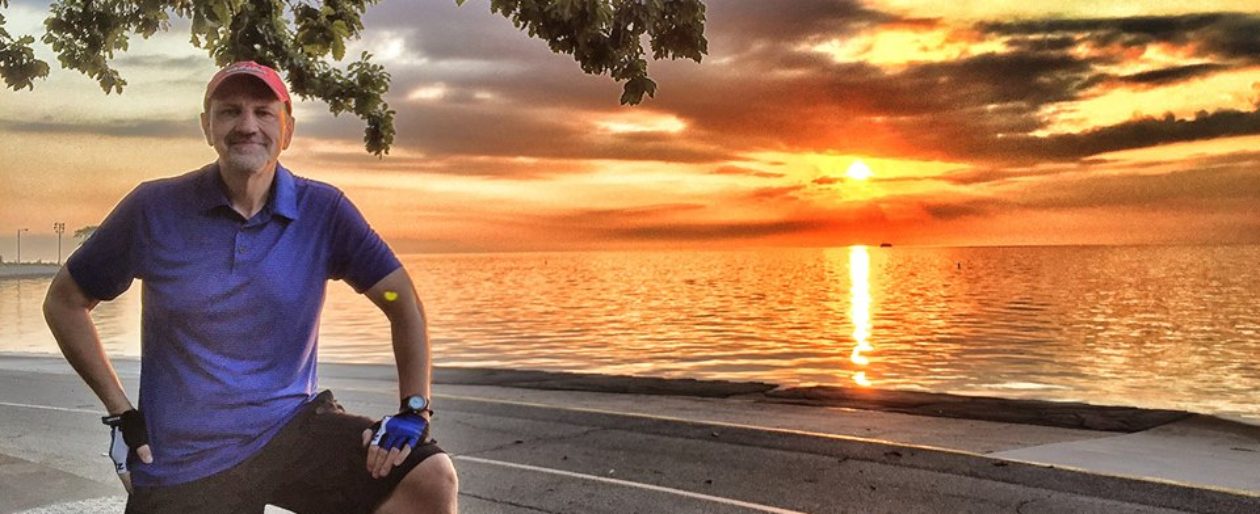
Random thoughts and my philosophy of life.