All posts by Dr. Mike

What A House Fire Taught Me

Many people see events as separate dots on a timeline. This is not the way that I view things.  To me, everything connects to everything else. I believe that the world is continually teaching us life lessons, but most people ignore them. This leads me to the story of Mike and the builder.

My father was reasonably handy, but only repaired things under duress. Our house was in shambles.  Although we had a basement workshop, he didn’t teach me the arts of construction and repair. Mostly, he would just tell me to fix things. The results would often be poor, and I would hear about it.

I assumed that by some magic I should know how to do things without any teaching or experience.  This made me a self-starter. It also made me hesitant to tackle significant repair jobs.

I never lost interest in fix-it-up projects, and they still fascinate me today. Accomplishing a small repair can give me a sense of pride and joy.

If you have read some of my other posts, you are probably familiar with my friend Tom.  He is a general contractor, and we are the best of friends. We complement each other in our skills.  There are things that I know how to do that are helpful to Tom. There are things that Tom knows how to do that are helpful to me.  The fascinating thing is that many of the ways that we help each other are not by providing direct services to each other. Instead, we complement each other by our association.

Tom is acting as the general contractor on a home rebuild project.  A fire started in the garage of the home, and in 20 minutes it caused an immense amount of damage.  In 20 minutes the homeowner’s lives were changed forever. Their family was safe, but almost all of the contents of the home were destroyed.  Part of the house will need to be rebuilt entirely. All of the interior walls, floors, doors, and fixtures will need to be replaced. The roof, siding, and driveway will have to be reconstructed.

I have been documenting the progress of the repair with photographs.  This project has been done in short segments. However, recently Tom invited me to spend the whole day with him as he was having his carpentry crew do some significant deconstruction and construction of the house.

He picked me up in his dually from Starbucks, and we headed off to the Naperville site. The house was boarded up, and about one-half of the siding had already been removed. I pulled out my Canon 5D Mark III from my Manfrotto backpack, and I started to shoot.  Soon his crew arrived. A caravan of trucks and vans lined the street. Their contents contained carpenters ready to do battle with a house. This job was too big for one person alone.

Tom’s carpenters are experienced, and they scattered over the house without so much as a word from him.  Soon they were ripping down the remaining siding and pulling off the charred wood. The house started to disappear as pile after pile of burnt wood, siding, and other materials filled the driveway.  As the walls came down in the garage, I could see the destruction that the fire caused. It was sobering.

Tom was now coordinating their activities.  Soon we started a shuttle process. To the recycling center with the siding.  To the lumberyard for lumber. To the garbage dump to offload garbage. To the hardware store to get hardware.  To the grocery store to get water. And so it went.

Piece by piece the garage came down, one slice at a time.  Piece by piece a new structure started to emerge, one board at a time.  The new construction wasn’t rising from the ashes; the ashes had been swept away.  The new garage was rising with careful and methodical planning. The new space modified to improve on the old, but still on its familiar footprint.  A structure connected to the remaining beams that were healthy and strong.

There will be a bigger loft above the garage, better lighting on the adjacent porch, a concrete driveway to replace the melted asphalt one.  The new space will look similar to the old, but it will be better.

The effort will be immense, the cost high. In the end, the owners will have their familiar house back, but it will be improved.  Something good will arise from something terrible.

You may think that I’m am using this construction project as a metaphor. However, I would like to challenge that belief.  A metaphor is typically a word or phrase used to describe something which is not literally applicable. What if these life lessons were utterly relevant?  What if there was a cohesiveness that binds us to our planet and all of its occupants? Like laws of physics, these laws were also constant. If one understood these “laws of the world” he or she could apply them globally to improve other aspects of their existence. I believe that we can enhance who we are, what we do, how we feel. The world around us can be our teacher; we need to stop, look, and listen.

Here are just a few of the things that this house taught me:

-Bad things can happen for no reason.

-It is important to accept things that you have no control over.

-It is essential to take responsibility for those things you do have control over.

-Most events or situations are neither good nor bad. We assign these values artificially.

-We can take good things and make them bad.  However, we can also take bad things and make them good.

-When faced with a difficult task, things go better with friends to help you.

-The homeowners will have a better house once the construction is completed.  They will need to pay for this metamorphosis with discomfort, time and effort.  They will have to accept a certain amount of uncertainty. This is no different than making a change in a person’s life. Changing from an unhealthy place to a healthy one will require discomfort, time, effort, and uncertainty.

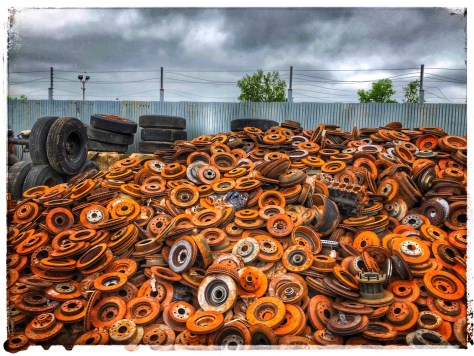
-At the recycler, we saw mountains of worn metal that will be melted and repurposed.  At the garbage dump, we saw broken cardboard boxes being prepared to be processed for future use. We also saw garbage that had to be discarded, as it was dangerous and toxic.

We may have parts of us that we think are bad, but with effort, we can make those parts good. Other parts have to be discarded, as they are so broken that they pose a danger to us.

-The fire destroyed some of the homeowner’s garden. For new growth to thrive, the dead plants need to be removed.  

Just like the dead plants we need to rid ourselves of bad habits, behaviors and relationships to make space for good, healthy ones.

These are just a few of the lessons that I learned from a burnt house and a general contractor.  Dear reader, look around you, life lessons are everywhere. Perhaps your clothes dryer is trying to tell you something.  Think I’m being ridiculous? Think again.

After the fire
Removing the bad to make room for the good
Rebuilding
Old metal will be melted and become anew
Some things are so toxic that they have to be completely discarded


Sitting In The Car Waiting

I sit in my car and wait. My daughter is inside her teacher’s home having her oboe lesson. I hear the sounds of a small gas engine, likely a lawnmower. It drones in the background. The temperature, a pleasant 67 degrees. It is damp due to recent rain. On my lap is my trusty lap table. On that table is my iPad. I type.

Another Monday in my retirement. It started with me donning rain shoes, rain jacket, and umbrella. As usual, I walked to Starbucks. I was surprised to see Tom’s truck already in the lot, as I’m typically the first to arrive. He was inside drinking coffee and polishing off an unknown snack; probably a scone.

Donovan, the barista, poured my tall cup of Veranda as soon as he saw me enter. I grabbed it and sat down next to Tom and started our Monday review.

Tom didn’t go to the Blues Festival as he had wished, due to yesterday’s rain. I did go on my breakfast walk with Ralph, despite the rain. We checked an auto-posting problem for his website, talked about our kids, sipped our coffee. And so the conversation went. Tom asked me if I had time to go to Roselle with him and I did a quick calculation, as I needed to drive Grace to her lesson. A few adjustments were made, and off we went.

Back home I did a minor project, and now I sit waiting in the driver’s seat of my red Flex. I don’t like to be unproductive, which is why I brought my gear with me.

Sitting, typing, occasionally looking out the car’s windows to a slowly changing scene.

Now a senior man in bib overalls is mowing his grass directly across the street from me. The mower’s growl replacing the noise from the more distant one that droned earlier.

I seem content with my new found slower pace, but at the same time, I’m slightly restless. I continue to feel that I need to be doing more, accomplishing more, being more. This is countered by the reality that I am doing things, just not at the pace that I had originally set for myself. I grant myself forgiveness for the reduction in my output.

As I sit, I notice that I am feeling grateful, and I’m not sure why… let me think. Grateful for living in a good community, Grateful for friends and family. Grateful for my health. Grateful that I still have the wonder of a little boy inside of me.

My mind drifts again. What would it have been like if my grandparents had not immigrated from Slovakia? Likely, I would not exist. But what if I did? Limited education, limited opportunities, a limited life. I wonder if I would have made the best of it. It seems to be in my nature to view things in a positive way. I think that I would have been OK.

Some people think that they can fix their lives by being somewhere else. In some cases this is true, but in most cases, it is not. After all, we take ourselves with us wherever we go.

I drift again. I wonder what is in store for the rest of the day. I guess life is a box of chocolates. I’ll bite in and see what I get.

Dear reader, what are you grateful for today?

Posting on the road.

Driving back home.

The Kuna Kampout

Traditions are customs, activities, or believes that are repeated over time. They can seem trivial to those who are outside the group, but they are essential to the individuals inside of it. Traditions offer a sense of security, belonging, and stability to participants. They sometimes serve a higher purpose, or they can be significant based on their merit. In our family, the Kuna Kampout is a tradition that extends to the greater group of my siblings, cousins, and their respective connections. It occurs once a year at a state park in Michigan, typically early in June.

My cousin, Ken, reminded me that the first Kuna Kampout happened in 2002 and was the result of a conversation that I had with him at another family event the year earlier. We were talking at the Clans Christmas get-together called Droby Fest (named after a Slovak meat/potato/rice sausage). I was telling him how much I enjoyed camping, and he had the idea of having a summer campout.

As a child, most family activities were done en masse with all relatives. Birthdays, First Communions, Confirmations, Christmas Eve, Easter; we would all gather, eat, play, and connect. However, our family expanded over time, and it became more and more challenging to host these large events. Our parties transitioned from extended family get-togethers to immediate family get-togethers.

On the Kuna side of the family, this change occurred when I was in high school. Suddenly, the only times that I saw my cousins were at weddings and funerals. I was young, and my life was busy; I didn’t think much about the change.

For the next 20 years, it was unusual to see my cousins as most of the weddings had already happened, and funerals were, thankfully, rare. In the 1990s my sister was talking to my cousin at a funeral, and together they came up with the idea of a fall reunion picnic. I was given the job of making the invitation flyer, and so started a series of major and minor get-togethers that have continued ever since. Our family is lucky to have my cousin Ken and his sister Kris, who have become our event planners. They are instrumental in keeping our family traditions alive.

Within the tradition of the Kuna Kampout are embedded sub-traditions. My nephew’s late night group hike. My cousin’s baked over coals pineapple upside down cake. A campfire sing-along accompanied by my bad guitar playing. However, the main reason we get together is to talk, eat and reconnect. It is over these three activities that we recommit to each other.

I am very fortunate to have nice relatives. No one gets drunk and violent. No one makes snide remarks. No one needs to brag their way to synthetic superiority.

For traditions to continue, they need to be flexible. I had to be flexible to attend this years camp out, as all of my immediate family could not attend. I had a choice to stay at home, or go solo. I decided to push myself and go to the event.

Being an introvert I like the security of having my immediate family around me, but instead of focusing on what I wasn’t getting I decided to ponder what I was getting.

The advantages of going to the camp out solo were:
It would be much easier to pack.
I would be able to spend more time with my cousins.
I could determine what activities I wanted to do.
I would challenge the guilt that I feel over doing things for myself.
I could try vandwelling.

These last two points were of great interest to me. I always have had a sense of obligation that somehow dictated that doing things just for me was bad. This is a ridiculous belief, but it is one that I hold. Over the last few years, I have gone on a couple of small trips with my friend Tom. However, the Kampout would be my first solo event. I want to write about people across America, and that will involve traveling by myself. This solo excursion could be a step in that direction.

Going solo would also allow me to try vandwelling. I am a big guy, but I have a big car that has fold down seats. The rear space is enough for a sleeping bag, and the ability to sleep in the car on a road trip would make any solo travel immensely more affordable. Another step towards my goal.

I am happy to say that I accomplished my goals. It rained heavily on the night of the campout, and sleeping in my car was an advantage, as many of the tent dwellers were soaked the next morning.

In review, this is what this year’s Kuna Kampout gave me. I kept a tradition and grew a little closer to my relatives. I broke a tradition, by traveling solo, and grew a little more personally. Lastly, I tried something new, vandwelling, and grew a little more adventurous.

Dear reader, explore and celebrate your healthy traditions, but feel free to modify or eliminate repeated behaviors that prevent you from moving towards your goals. Celebrate the relationships in your life. There is no better time than right now to let those around you know that they are your priorities.

My home away from home.
Vandwelling.
Playing the guitar
A smaller, but enthusiastic group this year.

On Old Friendships

Weeks ago we set up the dinner date with Ralph and Anne, and our get together was finally upon us. Julie picked a new fusion restaurant in the River District that she thought didn’t take reservations. Since it was an easy walk from our house, we decided to hike to it early and secure a table for dinner. We would meet Ralph and Anne there. All went as planned with two major exceptions. The place did take reservations, and we didn’t have any.

The trendy hostess said it would be over  90 minutes to seat us at a table. Frankly, an hour and a half is just too long for this old doctor to wait for the privilege to eat a taco pretending to be something more exotic than what it is. We left the fusion joint and traveled down the street to the Rosebud, an Italian restaurant.

I have known Ralph and Anne for over 27 years. About 25 years ago Ralph and I formed a partnership with a couple of other docs and created Genesis Clinical Services, which is a psychiatric and psychotherapy clinic. Together we built the clinic into a successful enterprise. Ralph is more business oriented; I’m more of a creative type. During my tenure as a senior partner, I created the company logo, constructed the first computer network, designed our letterhead, and much more. I even taught myself web-design and built our multi-media website. I was very invested in having the place succeed.

Unfortunately, such efforts come at a price. I was working at the clinic, plus another job. On my “free time” I was immersed in HTML code and Photoshop. What was the actual cost for me? My health. I started to talk to Ralph and another partner (Steve) about my leaving the partnership about 18 months before I did. With that said, I don’t think either of them believed that I would give up all of the benefits of being a partner in a successful medical practice. They were wrong.

Partnerships are like marriages. When you get “divorced” feelings get hurt. Although I thought that I had done everything correctly, the actual separation was very traumatic. I was hurt, felt betrayed, felt angry. I think the same could be said of Ralph. To make matters worse, I had decided to stay with the practice. I went from being a top dog to a lowly contract worker. I did this because I thought it would cause the least amount of trauma for my patients. I felt that I could handle it, this was a miscalculation.

After the dust settled, I was determined to put my angry feelings behind me. I know that Ralph is a good person and I believed that he would not deliberately try to hurt me. The reality was that despite the fact that we had grown to 5 partners, Ralph and I did the majority of the administrative work. My leaving placed a significant burden on him. Early on I intellectually forgave him for his actions. A workable truce was established. Unfortunately, intellect and emotion are two separate things. I was still raw and hurting. The closeness that I felt towards Ralph was replaced by a protective shield. I was in self-preservation mode. He was likely in a similar place.

At times I would cautiously extend a hand of friendship to him, and at other times Ralph would extend one to me. Like most reparative situations our connection trajectory wasn’t linear, it was jagged. Despite our mutual trauma, we both saw the greater picture. We were good people who genuinely cared about each other. We weren’t willing to throw away our friendship based on an isolated disappointment. We started a deliberate plan of walking with each other. A time of talk and reflection.

I can’t say when my emotional forgiveness caught up with my intellectual forgiveness, but it was a while back. Thankfully, we are back to our “pre-trauma” friendship state.

And now back to the Rosebud…

I texted Ralph that we moved our dinner plans to the Rosebud, and in a few minutes, he arrived with Anne. Nods were exchanged, then hellos. We sat down to Italian food and a little red wine. Talk of career, kids, potential vacations. It was just a regular evening with friends. It was beautiful in its lack of uniqueness. As we parted Julie asked me, “Do you think that they had a good time?” I replied, “I think so, I know that I did.”

Dear reader, I am a person who does not need many friends, but I do need some friends. Like any other relationship, sometimes friendships go smoothly, sometimes less smoothly. I am glad Ralph and I saw the bigger picture, and that we were willing to reach out to each other until our connection was fully healed.

At the same time, I understand that this scenario is not always the case. In my 65 years, I have had long-term friendships abruptly end for no apparent reason. I have also had friends distance themselves from me because of a misperceived slight, despite efforts on my part to correct the issue.

I tend to have very long-term friendships, but even here I need to reassess my connections with others. In retrospect, I have friends who only contact me when they need something from me, or when the fancy strikes them. When they have been asked to put out a little bit of effort for me, they have better things to do. Are these real friends? Their actions say no, but I am still uncertain. Do I continue to invest in these friendships? Do I let the connection coast along until time or an event forces the relationship back into the atmosphere of reality; where the relationship will burn up and disappear? Do actively end them? I do not have an answer to such questions at this time, but I am pondering.

I do know that friendships come and go. Some are worth considerable effort to maintain. Some get effort that is hugely undeserved. I have people in my life who appreciate me for who I am, rather than what I can do for them. Of course, I am there for these people. The amazing thing is that they are also there for me. These connection feel true and intrinsically more satisfying than some of the “what have you done for me lately”relationships from my past.

Dear reader, honor your friendships. Tell your friends that you care about them. Be kind to your friends. Don’t waste excessive energy on people who are not willing to do the same for you. You have value and worth that is based on who you are as a person. Fill your life with people who you love, and who love you. Celebrate that you are loved.

LilliRose’s Story: Living with Hidradenitis Supporativa

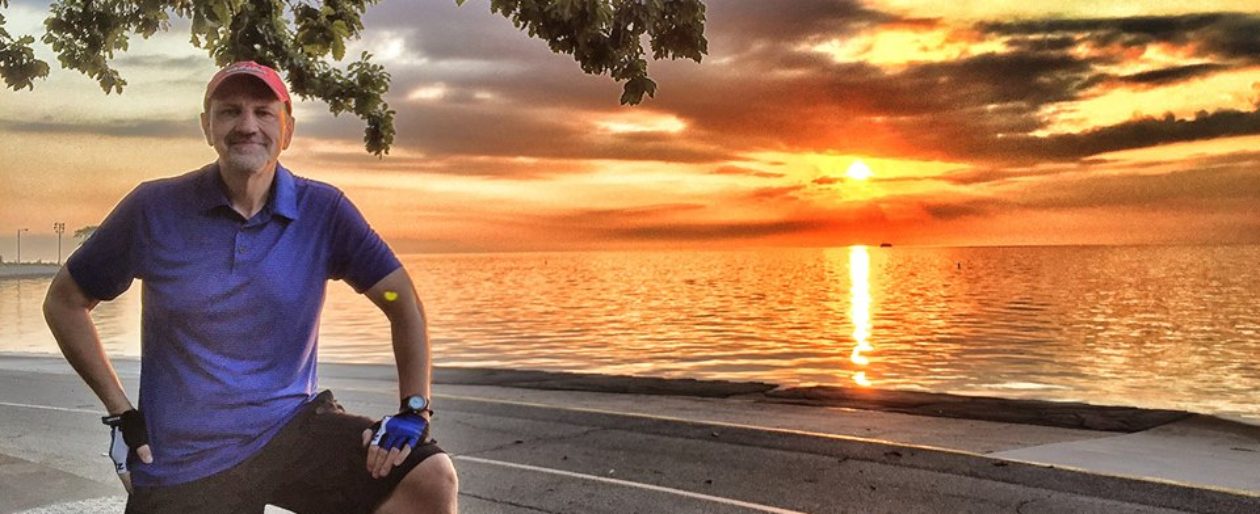
I arrived early at the Schaumburg Starbucks. I didn’t want to be late.  I had corresponded with LilliRose for several weeks and had sent her my photo a few days earlier.  I told her that I would be wearing a red ball cap for identification. I didn’t know what to expect, as she was my first interview

After a short time, I heard my name being called from behind me.  “Mike Kuna?” I turned to see a beautiful 24-year-old with a bright smile.  It was LilliRose, here is her story.

LilliRose grew up in Schaumburg, the oldest of two children.  Early in her life she started to take dance and had a natural talent for it.  She is creative and excelled not only at dance but also at acting. Although dedicated and intelligent, LilliRose had difficulties in school with reading and math.  It was later determined that she had both dyslexia and dysgraphia. Her mother stepped in, helped her, and eventually, her reading ability improved. However, math continues to be a struggle for her.

LilliRose was active in school theatrics and was also involved with a musical theater production company during elementary and high school.  Her acting skills caught the attention of a manager who told her, “You can act,” and for several years she tried out for a variety of parts that ranged from local TV commercials to LA productions.  In school, she was active in Poms and maintained a “B” average despite her learning issues. On the surface, it would appear that she was leading a charmed life.

When LilliRose was ten, she discovered a lump on her inner thigh close to her groin.  She is a private person and kept the bump to herself. Months later that her mother discovered it when she saw LilliRose in a bathing suit.  Concerned, her mom took her to a dermatologist who told her that he didn’t know what the bump was. Other doctors and other treatments followed.  The bump sometimes got bigger, sometimes smaller. None of the treatments helped.

It took about a year before a new doctor finally came up with the correct diagnosis, Hidradenitis Suppurativa (HS) a rare skin condition where the patient develops painful cysts, papules, and nodules in the groin, breasts, and armpits.  Cysts can ooze malodorous pus. The disease is chronic, its cause unknown, treatment is limited, and there is no cure.

LilliRose tried to ignore her illness and to live her life as a typical teen.  She went to school, dated, and was active in extracurricular activity. “I didn’t think about HS very much.”  She held onto the false idea that one doctor told her, “You will outgrow this illness.”

She entered Columbia College as a dance major.  However, after a year of schooling, she realized that she did not have the all-consuming passion necessary for a dance career.  She is now on a hiatus from school and supports herself as a server.

Two years ago the bottom dropped out for LilliRose.  Her lesions spread to her underarms, and this was devastating. “Before they were hidden, now everyone could see them.”  She also became aware that her HS would not fade away with age. It was sobering for her to realize that she could be dealing with HS for the rest of her life.  LillieRose fell into a deep depression.

“I ignored my HS before, but two years ago I faced it. I didn’t understand how I could deal with the sores and pain when I was younger and then couldn’t as an adult.”  Things that she did in the past became difficult. She started to give up activities. “The pain can range from intense burning to bruise-like. Sometimes the searing pain will shoot down my leg.  It can make it impossible to dance. Sometimes, I can’t even go to work.” Eventually, LilliRose sought help by attending an outpatient treatment program for anxiety and depression. “It was helpful, but I knew that it was not enough.”

One day she decided to move forward by taking a more active role in her life.  She studied nutrition and discovered that certain foods made her condition worse.  “I love french fries, but if I eat them I know, I’ll have a flare-up the next day.”  She regularly went to the gym. She attended a meditation class. She started to learn things for the sake of learning.  “I have a friend who is a forest ranger. We go walking, and he tells me the most amazing things about the forest.” She changed jobs, she made new friends, she read more.  “I didn’t want to take medication for my depression. I prefer a more natural approach.”

LilliRose feels fortunate that she has very supportive parents and a wonderful and understanding boyfriend. Although she would like to feel even better, she has made progress dealing with her anxiety and depression.

Her HS has impacted her in a variety of ways, but not all of those ways are negative. It has made her acutely aware of other individuals who suffer from physical and emotional illness.  She plans on going back to school next term, this time to study business. Her goal is to eventually open a center where people of all types of disability can gather. A place that will provide dance and art therapy.  A place that will be a home for rescue animals who have nowhere else to go.”I have two dogs, and they are always there for me when I’m having a flare-up. Animals can be healing” The center will provide a welcoming place anyone who suffers from a disability.  A place where they are accepted, understood, and helped.

Thank you LilliRose for talking to me.  

If you have a story that you would like to tell, please contact me at SPAMmike_kuna@hotmail.com (remove the word SPAM in the email address).

To learn more about this project click here.

LilliRose


NNHS Graduation/The Ugly White American

It was a little before 6 PM, and I received an urgent call from my wife, Julie.  “You got to get here now!” She said. She had driven my daughter to Naperville North High School for her 7 PM commencement ceremony.  “The place is already packed!” Julie exclaimed through my earpiece.

I told her parents that we needed to finish dinner and get moving.  Soon we were in my car driving the 6 minutes to the school. As we arrived, I could already see the parking lot filling.  Luckily, my wife had obtained handicapped parking, as her parents are both near 90.

Her parents were guided to handicap seating, and we made our way to the bleachers.  As usual, guests had secured extra spaces for their friends and relatives by holding spots with coats and blankets.  With that said, there were still swatches of seating, and we quickly found a place for the three of us. We settled in, and I started to fiddle with my camera.

About three rows in front of us was a family of Indian origin.  It looked like a dad, mom, a kid and some relatives. It appeared that they had a good family representation, but they also had blanketed an area in front of them for additional guests.

Around 10 minutes before the ceremony I saw a large white man out of the corner of my eye.  He was wearing the suburban white guy uniform, khaki pants, and a blue shirt. With him was a teenage girl sporting an expensive haircut, and presumably, the guy’s wife who looked like a suburban white mom.  He started to push his way into the bleachers as he headed for the seats reserved by the Indian family. I could hear the small Indian man telling him that he was saving the seats for his family. The big white guy seemed to sneer as he loudly said, “They are not here now, they lose their seats.”  (or something similar to that). The Indian man protested more, but the big white guy moved forward, followed by his family. Speaking of the white guy’s family, they moved in without any sign that they were disturbed by his behavior. I thought, “Talk about entitled.”

The Indian man gave up, but I could see the humiliation on his face.  My wife turned to my son and told him, Don’t you ever act like that man.”  My son replied, “I never would, or will.”

Five minutes later I spotted a younger Indian man coming up the bleachers.  Behind him was an elderly Indian woman. Her very white hair neatly pulled into a bun, her body bent over from age.  The reserved seats were intended for these people. I imagined the younger man picking up his grandmother for this extraordinary day. I pondered that they likely came a little late to avoid the surging crowds, as the lady looked frail.  I thought of the excitement that they must have felt anticipating the graduation.

There was no seat for them.  The white guy saw them but could care less. They uncomfortably squeezed in with their relatives.  I felt as powerless as the small Indian guy. Do I create a scene? That would do nothing. Should I apologize to the Indian man for the other guy’s horrible, entitled, and self-centered behavior?  That would probably embarrass him even more. I said a little prayer.

At the end of the two-hour ceremony, we exited, and God granted me a favor.  As I was coming down the bleachers, I saw the elderly Indian woman trying to exit.  The crowd was pushing forward and would not yield. I drew myself to my biggest white guy size, and I blocked the path behind me making space not only her but her entire clan to exit.  As the small Indian man left the row, he looked up at me, and in his eyes, I could see his appreciation. I showed him the respect that he deserved. I felt a little bit better.

The big white guy had hooted when his son’s name was called to gather his diploma.  I made a mental note as I wanted to see who he was. I thought he had to be someone in power to treat another human being so terribly.  I found the son on Google. He played football for NNHS and had a few minor newspaper articles, but I could not find the dad. His big guy’s ego was more significant than his position. One of the articles that I saw mentioned that the son was a “good guy.”  I thought to myself, “I hope so.”

Dear reader, please love your neighbor, and “Don’t’ you ever act like that man.”

Graduating almost 700 students.

Watching Galactica

I enjoy spending time with my family, and they enjoy spending time with me. With that said, as of late beyond the dinner meal and vacations it is more common that my connections with them are one-to-one instead of en masse.

This modular way of relating has been increasing as my kids have aged from children to teens. They have their own lives to live, and at any given time one or more of them may be hanging out with their chums. I know that this evolution is reasonable, but I still long for the time when we spent most of our hours together.

On Thursday evenings I cook dinner with my two youngest. We laugh, joke, and review our day with each other. It is a great time that we look forward to. However, “Making Dinner With Dad Thursday,” only includes three of the four remaining in-house Kunas. Thankfully, there is one event where we all participate, that event is watching “Battlestar Galactica.”

Battlestar Galactica is a TV series that ran for four seasons, starting in 2004. The storyline is science fiction and involves a humanoid race fleeing from their robotic enemies as they try to find a mythical earth. This summary may not sound very compelling. However, the storyline is just a canvas to explore other questions. Questions of prejudice, questions of religious intolerance, questions of duty, to name a few.

After she read good reviews about the series, my wife suggested that we watch the show, which is streamable on Amazon Prime. None of us viewed the show when it initially aired, so we thought we would give it a try as a family activity.

Since this is a family watch, strict policies and procedures quickly evolved. It is unclear who developed said policies, but all participants vigorously enforce them.

Here are a few examples:

1. We can only watch an episode when the entire group is present.
2. We try not to read the Amazon Prime plot summaries beforehand.
3. It is encouraged to loudly express feelings about characters and situations while the show is playing. It is not uncommon for one or more of us to loudly gasp or shout a condemnation to an on-screen actor.
4. All lights have to be off when we are watching the show to allow full immersion.
5. If a viewer gets up for a snack, it is acceptable to beg, bully, or shame them into getting refreshments for the rest of the watchers.
5. Wild speculation about a character or the plotline is encouraged. 6. Debate over such speculation is expected and should be as raucous as needed to make a point.

We typically watch one or two episodes at a time, as that is the amount of TV that I can tolerate, and it may be a week or more until we gather again. Because of these restrictions, we have been watching episodes for months, and we still have a few left before the series end.

It is a fun time that draws us together. Many of the shows deal with philosophical questions which serve as fuel for our family discussions and debates.

Like “Cooking With Dad Thursday” it is something that allows us to gather as a family. When we finally finish the Battlestar series, we will find another activity that will “force” us to spend time together.

It is essential for us to remember that we are a family. It is vital for us to remember that we are there for each other. It is crucial for us to remember that we love each other. Activities like this serve these purposes.

Dear reader, I would like to ask you to find your own “Battlestar” activity for your family. Perhaps it will be a family dinner, maybe a board game night, possibly something else. It doesn’t matter, it just needs to be something that is shared with each other and (on some level) allows interaction and communication.

Children become teenagers, teens become young adults, young adults become adults. The time that we have with each other is precious and limited. You will never get to experience today, again. The same can be said of this month and this year. Don’t waste the gift of your family.

On Kindness

Five PM on Friday before my birthday party finds me seated in my car departing Rockford, Illinois. I turn right on South Alpine, then left on US 20, then right on Interstate 39.  I’m now locked in for my 90-minute drive back to Naperville, back to home.

My iPhone automatically connects to the car’s Bluetooth audio system.  I hit the quick dial button on my Flex and dial up my sister, Carol. I often talk to Carol on my long drive home from Rockford.  

Carol has favorite subjects that typically center on politics and food plans.  However, in a 90-minute drive, there is always time for other topics. On this Friday we talk about kids, various weekend plans, and my upcoming 65th birthday party.  Curiously, she brings up a memory from 60 years ago. What makes this memory unique is that it doesn’t represent a milestone or major event. Instead, it is a simple memory that generally would be lost to time.  Making this recollection even more surprising is the fact that it is also a memory that I distinctly remember. It is the memory of my sister’s slumber party.

I travel back to the late 1950s.  Back to my Southwest Side Chicago home.  The old bungalow desperately in need of repair, the one with broken furniture and worn carpeting. My sister is having a slumber party with several of her girlfriends from college.  The house is cleaned to the best of its ability; snacks are at the ready, clean sheets are on the beds. I am there as a five-year-old boy, and I serve as a diversion for the 20-year-old guests.  We are playing hide-and-seek in the house. I laugh with one of them as she finds me hiding behind a shirt in a tiny closet. The next day I hear my sister recounting the get-together to my mother.  She tells her how this guest commented on what a kind little boy I was. I find the description of me upsetting. Even at the age of 5, I know that my family prizes intelligence above all. In my child’s mind, I wished that Carol’s friend reported that I was smart, not kind.

Kindness didn’t seem like much of a prized quality; it was just who I was.  Why wouldn’t I be kind? Everyone can be kind; this attribute didn’t make me unique at all.  Being smart, that would make me special. Being smart would make my father more interested in me.  Kindness felt like a weakness. A person who could be taken advantage. Someone who was not tough. Another one of my defects. I couldn’t imagine my father putting his arm around my shoulders as he announced to our neighbors, “I’m so proud of Michael, he is so kind.”  

Fast forward to late 2017 and my impending retirement from private practice.  My office staff had contacted my referral sources and my patients and asked them to write a memory about me.  My referral sources commented about my diagnostic skills and the quality of care that I delivered. Their overall theme was that I was smart.

However, my patients saw me in an entirely different light.  Almost universally they commented on the fact that I listened to them, didn’t judge them, and was kind to them.  Clearly, the most important qualities that I possessed for them. These were patients who I brought back from suicidal depression, severe psychosis, and life-disabling anxiety.  Their comments were not about my expertise in psychopharmacology. This seemed irrelevant or at least expected. What was most important to them was that I was kind to them. A quality that was lacking in other relationships in their lives.  

Fast forward to last week and to the gift that my wife gave me.  She had also “commissioned” a memory book. This one created from my friends and relatives letters.

I am now back home from the party, and she presents me with my memory book.  The first letter is from her. She recounts memories from the past. Our marriage, the birth of our kids, other events.  Woven into her recollections is a theme. She notes how kind I am. I start to read the letters from my kids, and a similar tone is indicated.  That theme carries through the other letters and cards in my memory book. The memories are different, but the description of kindness remains the same. As I read, I reflect on my kids. They are all brilliant, but they are also very kind. I am so proud that they are kind.  I tear up and I fill with emotion.

Dear reader, I am fortunate to travel in circles of smart people.  Smart people are interesting, they are quick thinking, and fun to talk to.  I like intelligent people, and I enjoy being around them.

Some smart people do great things with their intelligence; some do nothing with their intelligence.  Some smart people use their intelligence to help others; some use their intelligence to take advantage of others.  Some intelligent people are kind, some intelligent people are mean and spiteful.

We can all strive to learn and grow, but you either have an innate intelligence, or you don’t. Kindness is universally accessible to all. It is entirely free and takes little effort.  Being kind makes you feel good. Being kind makes others feel good. In a kind world everyone benefits. So why is it that people choose to be unkind? Why is it that we prize “reality” TV shows where we enjoy seeing others being humiliated or shamed? Why is it that we love to brag to others that we have more than they do when their envy contributes zero to our lives?  Why is it that we choose to hurt when it would be just as easy to be caring and supportive?

For whatever reason, the people around me think I’m a kind person.  Now at 65, I have come to understand the importance of what my sister’s friend told her 60 years earlier.  Kindness does matter, its importance equals or exceeds intelligence. What would you prefer, a kind and loving parent/spouse/friend, or a brilliant but mean and spiteful one?

Dear reader, I would like to challenge you today to make an active effort to be kind to those you encounter. Kindness matters.

My Birthday Party And Other Stuff

Sunday was the day; I was not only excited, but I was also very anxious.

Julie, my wife, had been planning my birthday party for months. Although a competent person, she feels insecure when it comes to planning big events, and so she also had the jitters.

Luckily, the morning started with a fun distraction. My friend Tom came over and we “sailed” the “Mary Ann” 5 miles down the DuPage River. It was the maiden voyage for my $80 estate sale canoe. The adventure was great fun, but it also demanded a second shower for the day as I was soaked in river water.

By mid-morning my daughter Anne and her family arrived. My grandkids, Sebbie and Diana, were the perfect distraction.

Two hours before the event Julie and my two youngest kids left me to set up the party. Julie had secured a room for the event that was big enough to accommodate everyone. However, there was still much work to do.

My introvert anxiety now on the rise, I started to pace. As the party time approached, I asked Anne and her family to go to the event so I could have a little time alone.

Twenty minutes later my daughter Grace was at the door, acting as my chauffeur. I was instructed to lap-carry my sugar-free birthday cake, as Julie was afraid that it would have melted if she had brought it earlier. We entered the parking lot to find Julie standing there. “You can’t walk into the party carrying your birthday cake. There are already people here waiting for your arrival!” I handed her the cake, took a deep breath, and entered the building.

Now inside I could see others coming through the window. I marched up the stairs and into the room where my party was being held. Julie and the kids had signs, balloons, and other symbols of celebration. Trays of food were set on tables; smiles were set on faces.

Friends and family had put themselves out for me. They were there to wish me well. Several hours later my party was over. I felt great but exhausted. However, the best gift was yet to come.

Now home, Julie handed me a scrapbook with a cover made by my son William. I opened it to pages of memories. Weeks earlier she had asked the invitees to write her with memories of me. The first pages contained letters from her and the kids. I was overwhelmed. Then other messages and notes. There seemed to be a general theme, which I will likely write about in a future post. There was so much love in the letters that I was barely able to get through a single one without tearing up. It was the best gift that I could have ever received.

We all live busy lives. It would have been easy for my guests to have sent their regrets. It would have been simple for them to claim to be too rushed to sit down and write a paragraph or two about me. It is a “what about me” world where everyone is more concerned about themselves than others.

There are times when someone has to decide to either give of themself or to withhold of themself. In this situation, people gave their time to come to my party. They gave their creativity to write down their memories of me. Did they do these things because I’m so awesome? No, they did these things because THEY are so awesome.

I once read that integrity is doing the right thing when no one else is looking. They could have done nothing. They could have justified their actions because they were too busy with their own lives. They didn’t say, “What has Mike done for me lately?” They didn’t calculate the cost of their actions vs. the gain that they would receive. They didn’t ruminate over petty slights that I may have caused them in the past. They just did what they did because it was the right thing to do, and they did it with joy and kindness in their hearts. This is what I felt when I attended my 65th birthday party, and this is what I felt when I read my book of memories.

There is no greater gift than to allow the people in your life to love you and to love them in return. Thank you party guests, thank you memory book writers. Your actions say so much more about you than they do about me. With that said, your actions touched me deeply, made me feel closer to you, and allowed me to see how truly wonderful you are.

Wonderful folks
Sugar-free cake!
tearing up with emotion

Let Me Write Your Story

Dear reader, I need your help. If you help me, your actions will also help you.

I want to document the lives of people.  This process would involve writing their story and taking some photos of them.  I’m interested in telling the story of regular people who have had extraordinary experiences. Extraordinary is a confusing modifier, so let me explain.  I would like to write about stories that changed the direction of someone’s life, either for good or for bad.

Most of us would say that having a child causes a monumental change in a person’s life. But what about the person who had to deal with a child’s serious illness, or perhaps the person who had a severe illness as a child? Did these experiences significantly change the trajectory of their life?  

How about someone who fell into a career path, only to find out that it was their life’s calling?  How about the person whose career path almost destroyed them?

Do you have a passionate interest that has impacted your life? Are you driven to change the world, no matter how small? Have you changed your ways (good or bad), and how did that impact you?  Did you make a significant career change that was surprising to those around you? Did some random event transform your life? YOUR LIFE MATTERS. YOU HAVE A STORY TO TELL.

I would want to explore one storyline with you, which would likely take several hours of your time.  Also, I would spend some time with you to take some photos.

I would write up your story and post it on my blog along with some of the photos that I shot. I’m doing this as a proof-of-concept for a possible book, which could include your story.

Who will know who you were 100 years from now?  I look at old photos of relatives, and I don’t even know their names, let alone their story. What would it be like to personally touch a future relative?  What would it be like for them to know just a little about who you were? What would it be like to have someone distill a pivotal part of your life into a cohesive narrative?  What would it be like to have high-quality photos attached to that story? Images that would transform written words into a real person to the reader. Not just random cell phone snapshots, but pictures that were taken with the expressed purpose of making your story real.

I am a professional interviewer.  I am a writer. I shoot photos professionally.  There are folks with lesser skills who would charge you to do what I’m offering to do.  Your story is worth telling.

If you are interested, here are some more details:

My initial effort will be limited to 5 stories (5 individuals). If you have an interest in me doing this for you, please don’t wait or hesitate.

I will decide whose stories that I document.

For this round, I will travel up to two hours (by car) from my Chicago area home.

Naturally, you will need to allow me to post/publish your story and photos. (I know, obvious)

I will make my written narrative and select photos available to you for your archives.    

Email me at SPAMmike_kuna@hotmail.com (remove the word “SPAM” in the email address). In a paragraph or two tell me about your story. Don’t let yourself or your story disappear with the passing of time.   

Let me know if you are interested.

Dr. Mike

PS If you are further than 2 hours away from Chicago, write me anyway.  Although my initial efforts are limited geographically, I absolutely will consider expanding the scope of this project in the future if there is enough interest.

Your story is important.
Photos make your story alive.